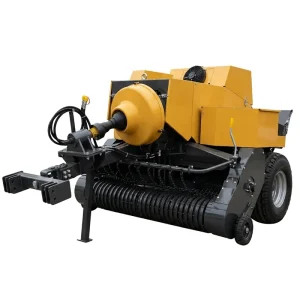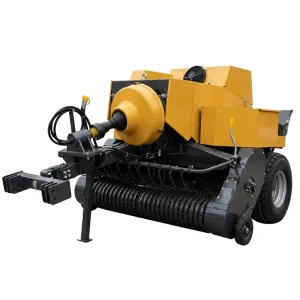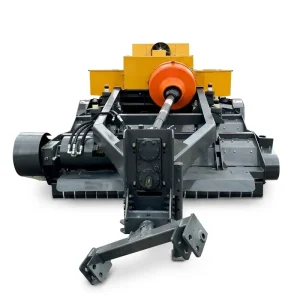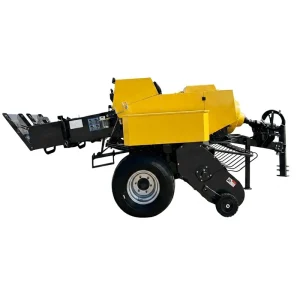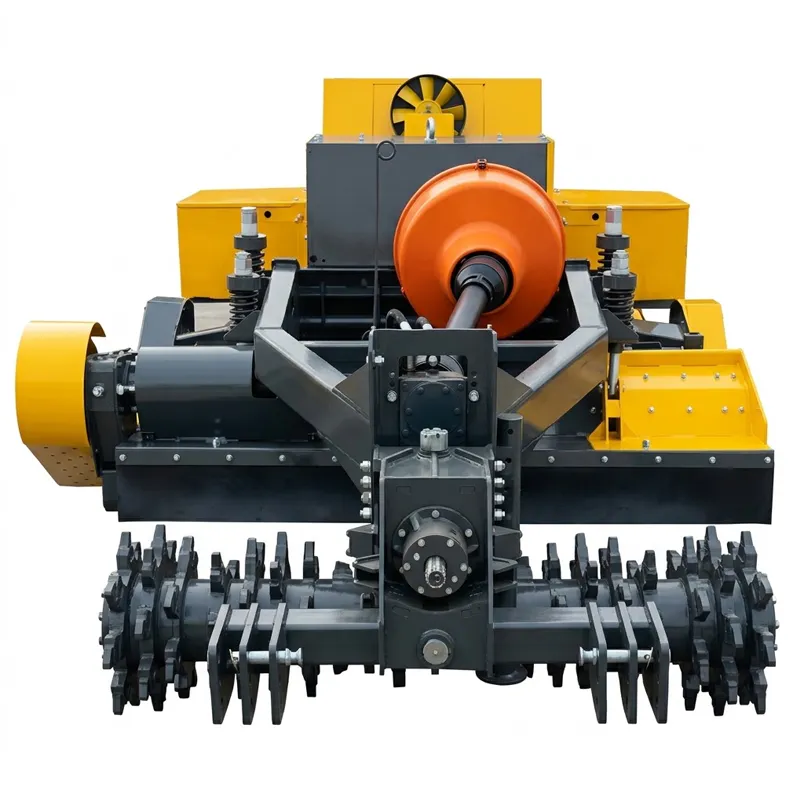
EP-6240×2760×1700 mm (L×W×H) Hammer-Claw Type 2200 mm Picking Width Square Baler
The EP-9YF-2200S is a trailed square baler built around a single shredding mechanism that sets it apart from conventional pickup-only square baler machines. Where a standard square hay baler simply gathers and compresses windrow material, the 9YF-2200S integrates an internal hammer-claw shredding unit that crushes and teases hard-stemmed crops — corn, sorghum, and cotton stalks — before they enter the compression chamber.
Operating at ≥73.5 kW of PTO power, the 9YF-2200S accepts a wider crop moisture and density range than any spring tooth or rigid tine pickup design, making it one of the most versatile large square baler machines available to commercial cereal and forage farms globally. It is already deployed across South Korea, Mongolia, Russia, and Belarus in corn stover, sorghum straw, and grass hay harvesting operations.
EP-9YF-2200S | 6240×2760×1700 mm (L×W×H) Hammer-Claw Type 2200 mm Picking Width Square Baler
Technical Specifications
The parameters below are extracted from the 9YF-2200S production specification. Confirm your tractor's continuous PTO output, drawbar capacity, and hitch compatibility before ordering. OEM configurations with alternative chamber sizing or shredder configurations are available on request.
| No. | Parameter | Unit | Specification |
|---|---|---|---|
| 1 | Model Name | — | 9YF-2200S Square Baler |
| 2 | Hitching Method | — | Towed-Type (Trailed) |
| 3 | Picking Width | mm | 2200 |
| 4 | Feeding Inlet Width | mm | — |
| 5 | Picker Structure | — | Hammer-Claw Type |
| 6 | Feeder Structure | — | Fork Feeding Mechanism |
| 7 | Knotter Type | — | D-Type |
| 8 | Number of Knotters | pc | 2 |
| 9 | Compression Chamber Section (W×H) | mm | 460×360 |
| 10 | Baling Method | — | Automatic Rope Baling |
| 11 | Matching Power Range | kW | ≥73.5 |
| 12 | Overall Dimension (L×W×H) | mm | 6240×2760×1700 |
| 13 | Machine Weight | kg | 2350 |
Dimensions given as Length × Width × Height in millimetres. Weight is approximate and may vary by regional specification or optional equipment.
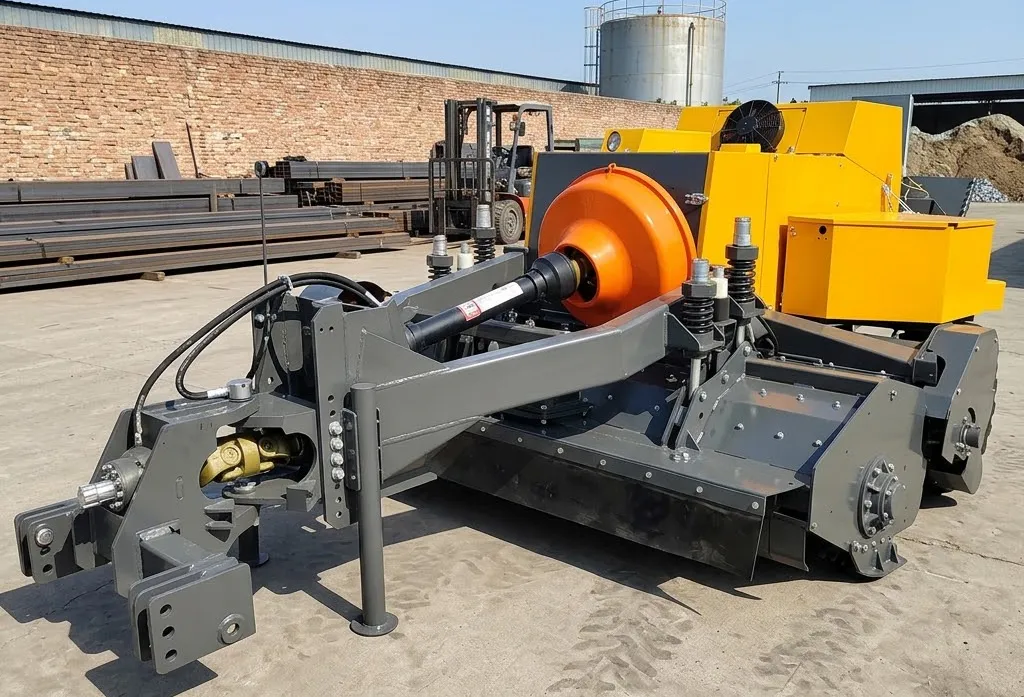
What Makes the 9YF-2200S Different From a Standard Square Baler?
Most square baler machines on the market are designed around a single core assumption: the crop has already been cut, conditioned, and laid into a windrow at a moisture level suited to baling. That works well for cereal straw on flat arable land, but it fails the moment a farm needs to bale standing or lodged corn stalks, high-moisture sorghum stems, or upright cotton crop residues that never formed a clean windrow. The 9YF-2200S addresses this by equipping the pickup zone with a hammer-claw type shredding mechanism — a stage of active mechanical processing that crushes and separates fibres before feeding them into the fork mechanism and compression chamber. The result is a square baler that can accept crops in the 10–23% moisture range for cereal straw and rice straw, and up to 12–25% soil-contact moisture for corn stalks on slopes up to 8° — conditions that would cause a conventional square hay baler to stall, blockage, or produce soft, poorly-tied bales.
For Korean farms managing mixed cereal and row-crop rotations, Mongolian operations harvesting native grasses alongside corn stover, and Russian contract balers serving clients with diverse residue types in a single season, the 9YF-2200S replaces what would otherwise require two separate machines. Its 2200 mm pickup width matches the working width of standard combine headers in most of these markets, allowing the baler to clear a combine's full cut in a single pass — reducing field traffic and protecting soil structure during the critical post-harvest period.
Five Key Advantages
The integrated hammer-claw shredder crushes hard stalks — corn, sorghum, cotton — before they reach the compression chamber. This pre-processing step increases bale density, improves forming stability, and allows the machine to accept coarse and standing crop materials that would block a standard large square baler without modification.
Unlike spring tooth or rigid tine designs that require a pre-formed windrow, the hammer-claw pickup can engage standing upright corn, sorghum, or cotton stalks directly — as well as crop material that has fallen flat. This is the only machine configuration capable of this operation in its power class, and it significantly reduces pre-baling preparation time on row-crop farms.
Leguminous and grass forage crops can be baled at 17–23% moisture; rice, wheat straw, and corn stalks at 10–23%; corn stalk soil contact moisture at 12–25%; and field slope up to 8°. This tolerance range allows the machine to continue operating in conditions where conventional square balers must stop and wait for drying — reducing weather-related bale loss during harvest seasons.
The 2200 mm pickup width aligns with the working widths of modern combine harvesters used across Korean, Mongolian, and Russian cereal operations. Clearing the full combine cut width in a single baler pass reduces field passes, fuel consumption, and the number of baling days required to clear a given area during the compressed post-harvest window.
Shredded and baled corn stalks are directly usable as livestock roughage, biomass fuel feedstock, or mulch material without further processing. The shredding action during baling creates a fibre texture that improves feed intake rate and biogas digester efficiency — two factors that matter to Korean livestock and energy crop operations seeking to extract maximum value from every tonne of field residue.
How Does the 9YF-2200S Square Baler Work?
The PTO shaft from the tractor drives the main gearbox, which splits power between the shredder drive, the feeder and pickup, and the plunger crankshaft with its knotter timing chain. As the machine advances across the field, the 2200 mm hammer-claw pickup engages crop material — whether lying flat in a windrow, lodged at an angle, or standing upright — and draws it into the single shredding mechanism. Inside the shredder, rotating hammer-claw elements running at high velocity impact the crop stems repeatedly, crushing node joints and separating fibres into a uniform, fluffy mass that compresses predictably in the bale chamber.
This shredded material passes into the fork feeding mechanism, which meters it into the compression chamber in controlled charges. The reciprocating plunger — driven by a flywheel-damped crankshaft — then compresses each charge against the growing bale at high force. Because the shredder has already broken up hard stem nodes, the compression resistance is more uniform than with unprocessed stalks, and the resulting bale has consistent density across its full length rather than the soft-core, hard-end profile common with unshredded corn bales. When the density sensor triggers, two D-type knotters fire simultaneously, wrapping and tying the automatic rope baling twine around the bale. The finished bale ejects rearward, and the cycle restarts immediately. At recommended field speeds, the machine completes a full bale cycle in approximately two to three seconds, depending on crop density and bale length setting.
Materials & Construction
Hammer-Claw Shredder Rotor
The rotor carries hardened alloy steel hammer-claw elements heat-treated to resist the high-impact wear from continuous corn stalk and sorghum node crushing. Individual hammers are bolted and reversible — worn edges are rotated before replacement, doubling the service interval per set of hammers and reducing consumable costs on high-throughput operations.
Welded Main Frame
Hot-rolled structural steel sections, fully welded and reinforced at plunger housing, hitch point, and shredder bearing mounts. The additional mass of the shredder system compared to a pickup-only square baler machine is accounted for in the frame geometry, maintaining correct drawbar tongue weight for stable trailing at field speeds up to 8 km/h on slopes to 8°.
Plunger & Compression Chamber
Hardened steel plunger face with replaceable wear inserts at high-contact corners. The 460×360 mm chamber interior is lined with wear-plate steel on the lower and side walls, which bear the highest abrasion load as shredded corn and sorghum fibre is compressed repeatedly against the growing bale column at operating densities.
D-Type Knotter Components
Alloy steel bill hooks and knotter cam followers with surface-hardened bearing contact faces. Knotter timing is driven from the main gearbox output shaft via a positive-drive chain — maintaining correct bill hook position relative to the plunger cycle even as the shredder drive imposes additional load variations on the PTO drivetrain during dense-stalk processing.
Regulatory & Import Compliance by Region
The 9YF-2200S includes a powered shredding mechanism in addition to the standard baler drivetrain, which means it falls under machinery safety regulations that specifically address high-speed rotating elements and their guarding requirements. Buyers in regulated markets should confirm compliance status before taking delivery.
South Korea
The Act on Promotion of Agricultural Mechanisation and the Rural Development Administration (RDA) voluntary certification framework apply to imported agricultural machinery in Korea. Machines incorporating high-speed shredder rotors must meet guarding standards equivalent to those set out under Korean industrial safety law (산업안전보건법). RDA-certified imported machines may qualify for government mechanisation subsidies — relevant for Korean farms transitioning from manual corn stover collection to mechanised baling.
European Union
CE marking under Machinery Directive 2006/42/EC (transitioning to EU Machinery Regulation 2023/1230 from January 2027) is mandatory. Combination baler-shredder machines require specific rotor guard documentation and risk assessment under Annex I, beyond the standard square baler machine requirements. ISO 4254-7 covers safety of crop protection and hay- and forage-making machines and is directly relevant to this product category.
Russia & EAEU
EAC conformity marking under TR CU 010/2011 is required for all machinery sold into Eurasian Economic Union member states, including Russia and Belarus. Agricultural machinery with shredding mechanisms must pass third-party conformity assessment at an accredited EAEU certification body. All documentation, including the operator manual, must be supplied in Russian for EAEU market clearance.
Mongolia
Machinery imports into Mongolia require technical inspection certification from the General Authority for Standardisation and Metrology (MASM) at the customs point. For complex machines with multiple drive systems such as the 9YF-2200S, buyers should request a complete technical drawing package and BOM from the supplier to facilitate the MASM inspection process. Pre-export inspection by a third-party inspection body can expedite customs clearance significantly.
Application Scenarios
The 9YF-2200S is the appropriate square baler choice whenever the crop type, moisture level, or field condition exceeds what a conventional spring tooth or rigid tine square baler machine can reliably handle. The following use cases represent its primary markets across Korea, Mongolia, Russia, and Central Asia.
Corn & Sorghum Stover — Korea & Russia
Post-harvest corn and sorghum stalk baling is the primary design application for the 9YF-2200S. The hammer-claw mechanism crushes node joints that cause blockages in conventional square balers, enabling direct baling of stalks in the 10–23% moisture range without pre-drying. In Korean upland corn-growing regions and Russian black-soil belt sorghum fields, this eliminates the pre-baling field conditioning step entirely — a saving of one or two tractor passes per field and a significant reduction in total harvest cost per hectare.
Standing & Lodged Crop Pickup — Diverse Terrains
The 9YF-2200S is notably the only square baler machine capable of picking up standing upright corn, lodged crops, and flat-laid residues in a single configuration — without changing the pickup system. For Mongolian farms where strong pre-harvest winds regularly lodge grain crops, and for Korean upland fields with variable terrain that causes uneven maturity and lodging, this flexibility removes a field decision that otherwise forces operators to choose between leaving lodged residue in the field or switching machines.
Livestock Feed & Biomass Supply Chains
Shredded and compressed corn stalk bales from the 9YF-2200S are directly usable as livestock roughage supplements without further processing — the shredding action opens the fibre structure to improve rumen digestibility compared with whole-stalk bales. For Korean dairy and beef operations, and Mongolian pastoral farms building winter roughage reserves, this feed-ready output adds tangible value over the same material collected in an unshredded round bale. Biomass and biogas plant operators in Russia and Belarus also specify shredded bales to improve feedstock loading rates in their digester systems.
Cotton & Alfalfa in Central Asia
Cotton stalk baling for straw recycling and alfalfa hay baling for feed trading are two high-volume applications in Central Asian markets that the 9YF-2200S serves with a single machine configuration. Cotton stalks require the same coarse-stem crushing capability that the hammer-claw provides for corn; dry alfalfa in the 17–23% moisture range bales cleanly through the same system. This crop-to-crop versatility makes the machine well-suited to Central Asian contract baling services that handle multiple clients and crop types within the same autumn baling season.
Compatible Drivetrain Components
The 9YF-2200S runs a more complex drivetrain than a standard square baler — the shredder rotor adds a significant additional load to the PTO shaft and gearbox. Using correctly rated, matched components from the same supply chain eliminates the most common cause of drivetrain failure during peak-season operation.
Square Baler Gearbox
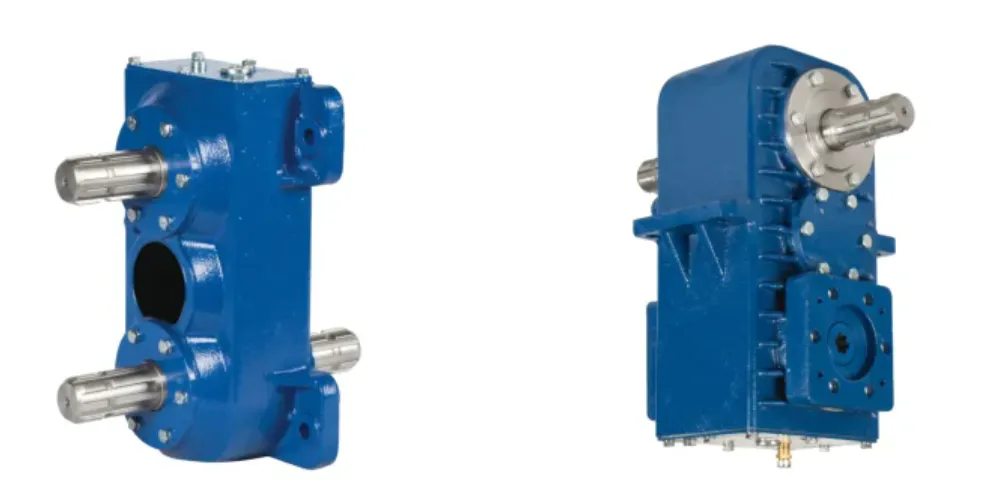
On the 9YF-2200S, the gearbox must distribute torque to both the shredder rotor and the plunger crankshaft simultaneously — a combined load peak that exceeds the requirements of any standard spring tooth square baler gearbox. Our square baler gearbox replacements are load-rated for the combined shredder and plunger torque profile of the 9YF-2200S, maintaining correct timing between all driven systems after installation. Using an underrated gearbox from another machine family risks timing drift between the plunger and knotters — the most common source of missed knots and field stoppages during high-output baling operations.
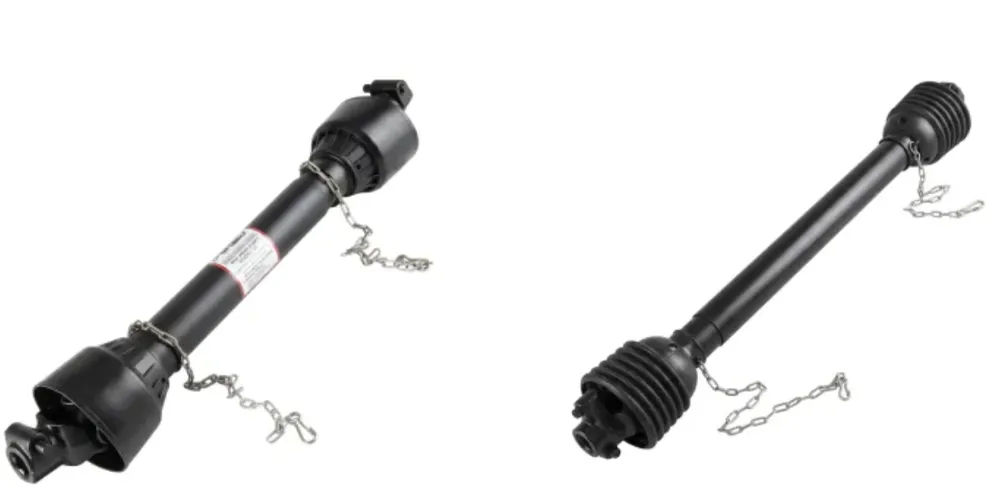
PTO Shaft for Square Balers
With the added shredder load, the 9YF-2200S requires ≥73.5 kW of continuous PTO input — at the upper end of the mid-power tractor range. A PTO shaft undersized for this torque level will fail at peak-load moments during dense corn stalk processing. Our PTO Shaft for Square Balers series includes a torque-rated model matched to the 9YF-2200S's combined shredder and baler power requirement, with CE-compliant guarding for EU and Korean market deployment and full EAC documentation for Russian and Belarusian import clearance.
About Us — A Decade of Field-Tested Mechanical Expertise
The people behind these machines are not a remote design office — they are engineers who have sat in tractor cabs during harvest, service technicians who have cleared blockages at 11 pm before the combine returns at 6 am, and former farm operators who know exactly what a missed bale window costs in real terms. That background shapes every mechanical decision made on our production floor.
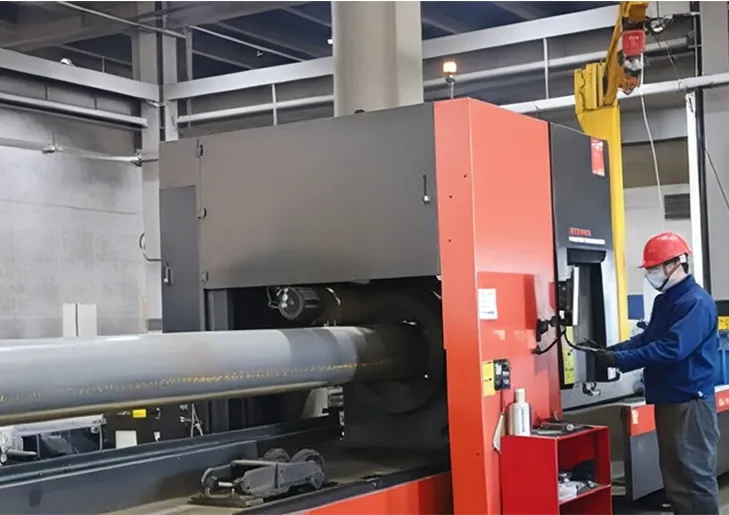
We founded this business in 2021, starting from a 2,000 m² workshop with an annual output of 100 machines. Four years later, we operate a 32,000 m² intelligent production facility and produce 2,000 units per year. Our distribution reach now covers Mongolia, Russia, and Belarus alongside the domestic market — territories where seasonal reliability and affordable parts access are the criteria that win long-term customer relationships. Every machine leaves our facility with documentation sufficient for registration in all major export markets, and our technical team provides pre-delivery specification advice at no cost for buyers comparing models across our square baler range.
Frequently Asked Questions
Editor: PXY