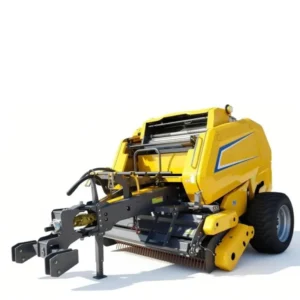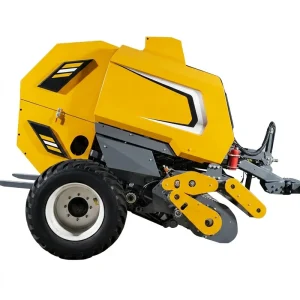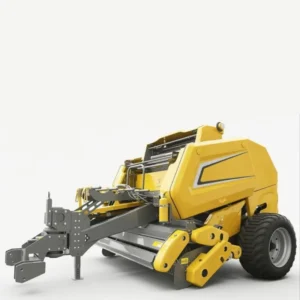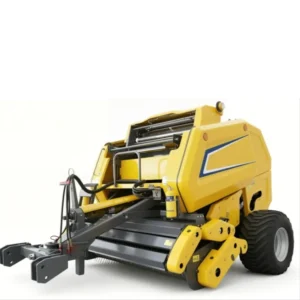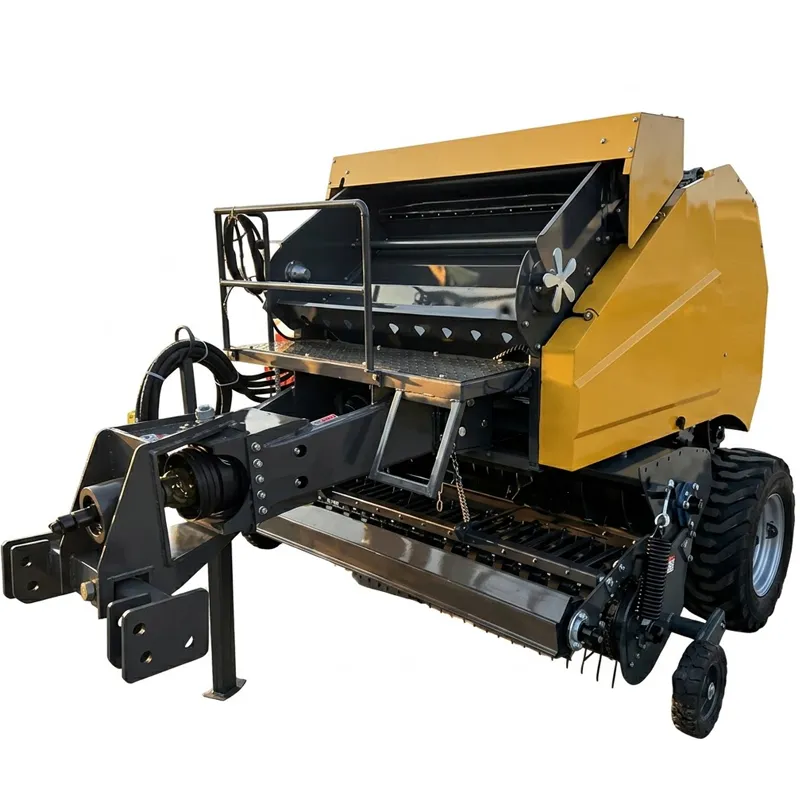
EP 3200 × 2500 × 2010LWH Spring Tooth Round Baler
De EP-9YQ-1950 Spring Tooth Round Baler is a trailed agricultural machine designed for efficient hay and straw harvesting. It features a 1950mm spring tooth pickup and a shift fork feeding mechanism combined with a screw continuous feeder for smooth crop intake. The roll drum type compression chamber, equipped with 18 pressing rollers (Φ190mm), produces dense round bales with a diameter of 1000mm and a width of 1250mm. The unit includes automatic net wrapping for secure baling. Requiring a matching power range of 36.7–110.3 kW, this robust machine measures 3200×2500×2010mm and weighs 2385kg, making it suitable for medium-to-large scale farming operations requiring reliable performance.
Agricultural Round Baler
EP 9YQ-1950 Spring Tooth Round Baler
1950 mm Picking Width · Trailed Type · Automatic Net Wrapping · 36.7–110.3 kW Power Range
Technical Specifications
| Nee. | Parameter | Eenheid | Specificatie |
|---|---|---|---|
| 1 | Modelnaam | — | 9YQ-1950 Round Baler |
| 2 | Hitching Method | — | Gevolgd |
| 3 | Picking Width | mm | 1950 |
| 4 | Picker Structure | — | Spring Tooth Type |
| 5 | Feeder Structure | — | Shift Fork + Screw Continuous Feeding Mechanism |
| 6 | Bale Chamber Type | — | Roll Drum Type |
| 7 | Width of Compressing Room | mm | 1250 |
| 8 | Diameter of Compression | mm | Φ1000 |
| 9 | Quantity of Pressing Rollers | pc | 18 |
| 10 | Diameter of Pressing Roller | mm | Φ190 |
| 11 | Bundling Type | — | Automatic Net Wrapping |
| 12 | Matching Power Range | kW | 36.7 – 110.3 |
| 13 | Overall Dimension (L×W×H) | mm | 3200 × 2500 × 2010 |
| 14 | Machinegewicht | kg | 2385 |
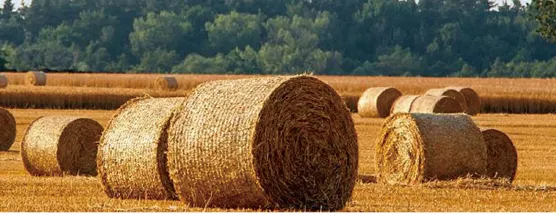
What Is a Round Baler and Why Does It Matter?
A ronde balenpers is a trailed agricultural machine that picks up cut or swathed crop material from the ground and compresses it into tightly wound cylindrical bales. These dense round hay bales resist weathering far better than loose windrows, making storage and transport considerably more efficient. For growers managing wheat straw, rice straw, corn stalks, or pasture grasses, a reliable round baler machine is central to a productive post-harvest workflow.
The EP 9YQ-1950 takes this proven concept and builds on it with a 1950 mm spring tooth pickup, a roll drum compression chamber, and an automatic net wrapping system — all designed to handle high-throughput baling without slowing down the harvest window. Whether you're baling on flat plains or moderately undulating ground, this agricultural round baler keeps material moving steadily from windrow to wrapped bale.
Five Key Advantages of the EP 9YQ-1950
What separates this round baler from generic alternatives on the market.
1950 mm Spring Tooth Pickup
The spring tooth pickup finger design gently lifts tangled or matted crop material without snapping stems, reducing leaf loss and preserving the nutritional value of hay. At 1950 mm, the picking width covers wide windrows in a single pass.
Dual-Mode Feeder Structure
A shift fork feeding mechanism combined with a screw continuous feeding mechanism ensures steady, blockage-resistant crop flow into the compression chamber — critical when operating in heavy-yield fields where material density varies sharply.
18-Roller Drum Compression Chamber
The roll drum bale chamber uses 18 pressing rollers (each Φ190 mm) to form consistently shaped bales with a finished diameter of Φ1000 mm. Uniform compression from all sides means bales hold their shape during transport and outdoor storage.
Automatic Net Wrapping System
Once the target density is reached, the machine triggers automatic net wrapping without operator input. This cuts manual intervention per bale, speeds up cycle times, and produces a tight, weather-resistant outer layer on every round bale — essential for outdoor hay storage in variable climates.
Wide Tractor Compatibility (36.7–110.3 kW)
This round baler machine accommodates tractors from around 50 HP up to 150 HP, which covers the bulk of mid-size farm equipment found across Asia, Eastern Europe, and South America. Operators do not need to invest in a dedicated tractor to run this machine effectively.
How the Round Baler Works
As the tractor pulls the EP 9YQ-1950 forward, the spring tooth pickup bar rotates and lifts crop material from the ground surface into the feed inlet. The dual-mode feeder — combining a shift fork mechanism for initial engagement and a screw continuous mechanism for smooth delivery — channels the material into the roll drum bale chamber at a controlled, even rate.
Inside the chamber, 18 pressing rollers orbit around the growing bale core, applying progressively greater compression as the bale diameter increases toward the target Φ1000 mm. The chamber width of 1250 mm matches the crop flow, keeping the bale evenly filled from side to side rather than peaked at the center.
When density sensors detect the bale is complete, the automatic net wrapping unit activates, winds the bale net wrap around the formed bale, cuts it cleanly, and signals the operator to open the rear gate for ejection. The cycle then resets immediately for the next bale, keeping downtime between drops minimal.
Materials and Build Quality
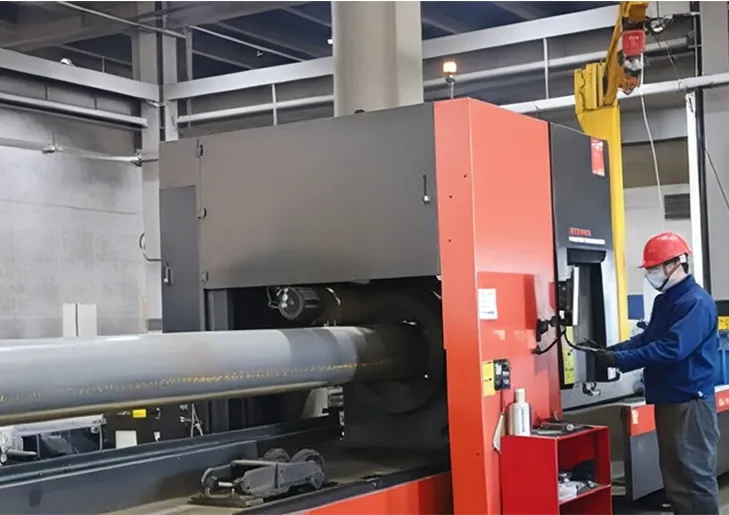
The main frame of the EP 9YQ-1950 is fabricated from high-strength structural steel, welded with full-penetration welds at all high-stress joints — including the hitch drawbar, the rear gate hinge points, and the roller mounting saddles. This approach resists the flex fatigue that builds up across thousands of baling cycles in an agricultural season.
Pressing rollers are precision-turned steel with a surface hardness treatment that extends service life even when baling abrasive crop residues like rice straw and corn stalks. The spring tooth pickup fingers are heat-treated spring steel, which gives them the flexibility to deflect over surface irregularities without snapping — a common point of failure on cheaper units.
External surfaces are finished with two-coat agricultural paint that resists UV degradation and rust through prolonged outdoor exposure. Bearing housings are sealed to IP-grade protection, reducing grease maintenance intervals and making the machine suitable for dusty harvesting conditions.
Round Baler Application Scenarios
This machine performs across a broad range of post-harvest and land-management contexts.
Wheat and Rice Straw
After grain harvest, straw windrows can be processed quickly before field conditions deteriorate. The 1950 mm pickup width matches wide combine discharge patterns, keeping up with fast-moving harvest schedules in major grain-belt regions of Russia, Ukraine, and Korea.
Pasture and Alfalfa Hay
For livestock operations, the spring tooth pickup system lifts delicate alfalfa leaves without excessive shatter loss. Formed bales weigh around 300–450 kg depending on crop moisture, making them practical to handle with a standard front loader. This is the core round baler application for dairy and cattle operations.
Corn and Sorghum Stalks
Post-silage or post-grain corn fields leave heavy, coarse residue that clogs conventional pickers. The dual-mode feeder on this round baler machine handles the uneven material density of cut stalk windrows without jamming, making field clearance faster and cleaner before the next planting window.
Biomass and Silage Crop
Energy farms and biogas operations use compact round bales for high-density biomass storage. The automatic net wrapping on this unit protects the bale surface during the extended storage periods typical of biomass logistics chains — keeping material suitable for processing months after baling.
Compatible Components & One-Stop Supply
We supply the full system — not just the baler. Our round baler parts and drive components are matched and tested with this machine, eliminating compatibility guesswork when ordering spare or replacement components.
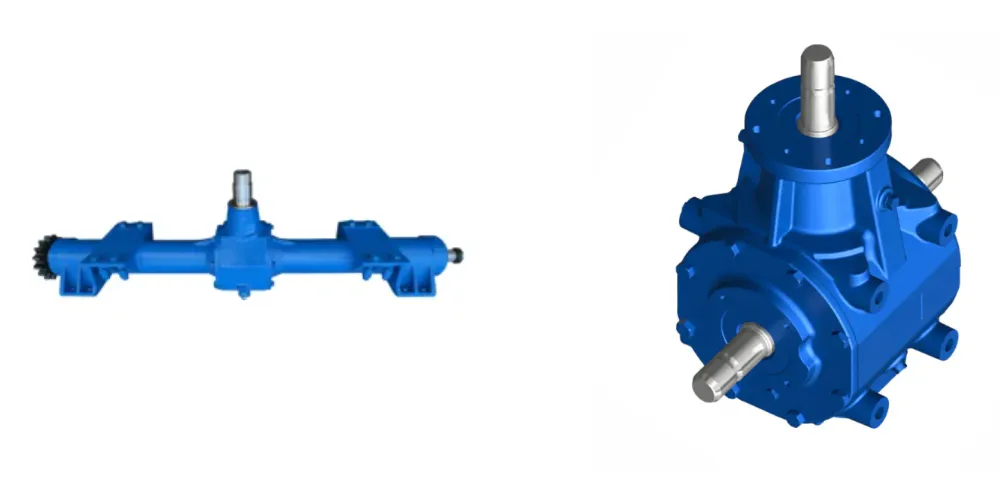
Round Baler Gearbox
The gearbox is the mechanical heart of any round baler. Our dedicated round baler gearbox range is engineered to the torque and speed requirements of the 9YQ-1950 drive train, providing consistent power transfer from tractor PTO to the pickup and roller systems across the full working RPM range.
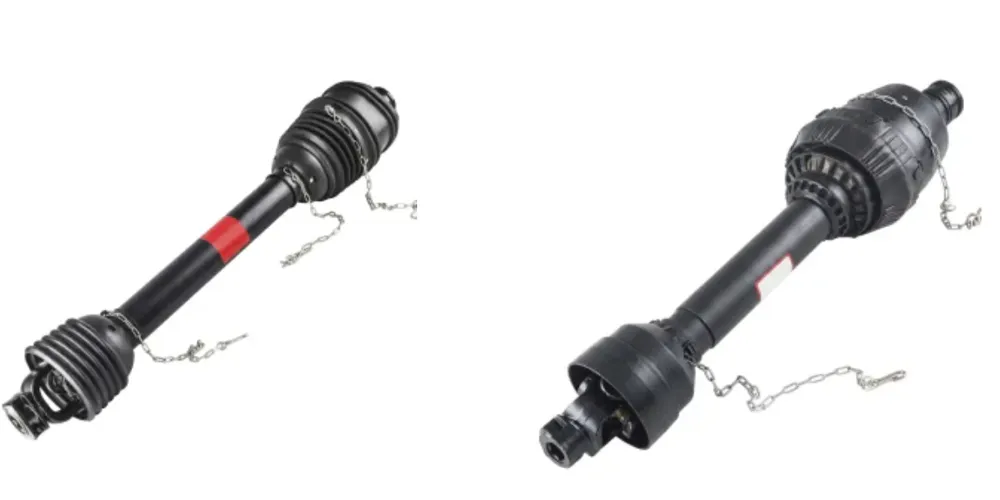
PTO Drive Shaft
A properly matched PTO shaft protects both the tractor and the baler from shock loads during feeding surges. Our matched PTO Shaft range covers the length, spline, and torque rating required by this machine — built with telescoping tubes and overrunning clutch options for heavy crop conditions.
About Our Team
Our team is made up of engineers, experienced farmers, and field service technicians — people who have spent real time working post-harvest residue problems in working conditions, not reading about them. That combination of manufacturing precision and hands-on agricultural understanding shapes how every machine we build is spec'd, tested, and delivered.
When we launched, we operated from a 2,000-square-meter workshop. Today, that same commitment runs across a 32,000-square-meter intelligent production facility, turning out over 2,000 units annually with a sales footprint that spans Mongolia, Russia, Belarus, and a growing range of international markets. More than ten years of accumulated experience in mechanical design and agricultural machinery engineering underlies every product that leaves our floor.
We started because too many farm operations were forced to choose between expensive premium machines and cheaper alternatives that failed at the worst point in the harvest window. Our goal was — and still is — to close that gap with machines that are built properly and priced honestly.
Frequently Asked Questions
What kind of tractor do I need to run a 1950 mm picking width round baler effectively on large grain farms in Korea?
How much does a round bale of hay typically weigh when produced with a roll drum baler using automatic net wrap?
Which baler feeder structure works better for rice straw baling operations in Southeast Asian humid field conditions?
Where can I find replacement round baler parts for the 9YQ-1950 when operating in Russia or Belarus remote farming regions?
How do I know when to replace the round bale net wrap supply on a continuous baling shift across a large wheat field?
Redacteur: PXY