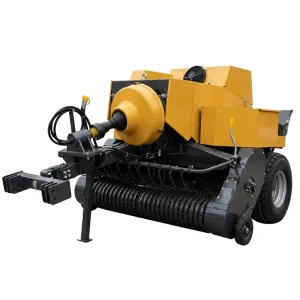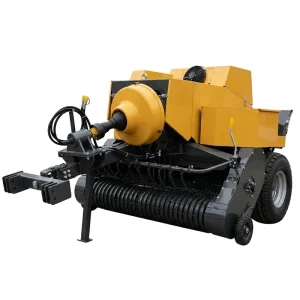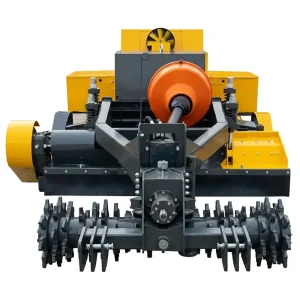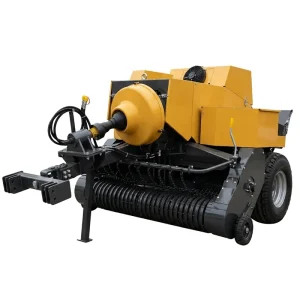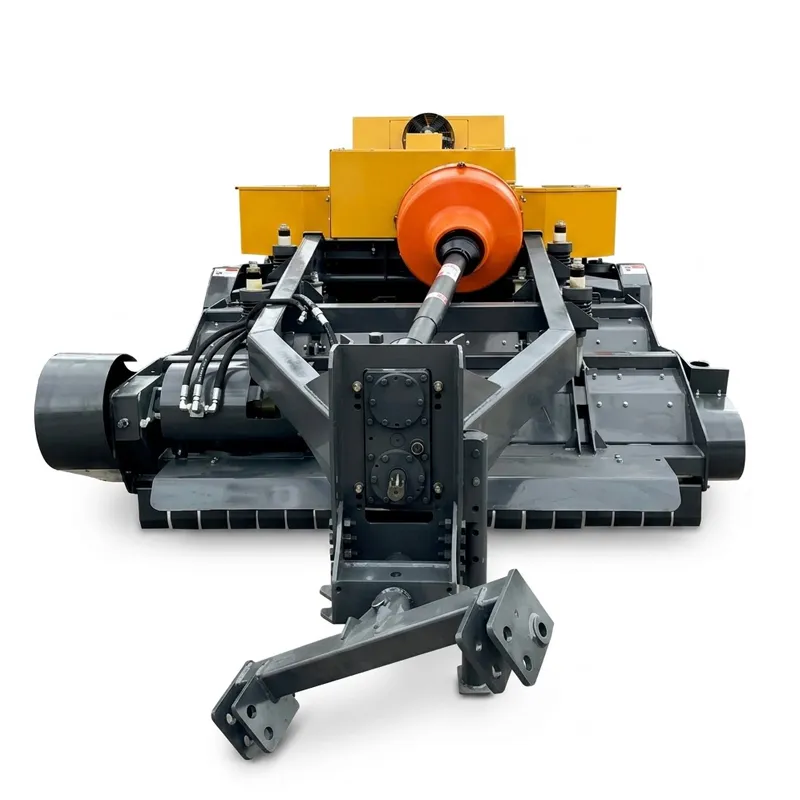
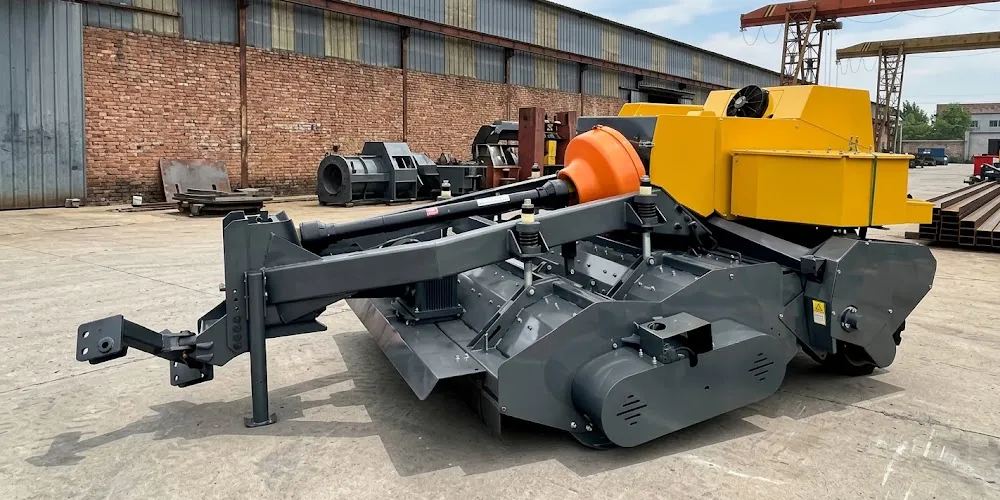
EP-6500×2900×3360mm LWH Hammer-Claw Square Baler
O EP-9YF-2200S Hammer-Claw Square Baler is a heavy-duty trailed machine designed for harvesting wheat, rice, corn, and cotton straw. It features a 2200mm picking width and a specialized hammer-claw picker for efficient crop collection. A key innovation is its integrated negative-pressure fan, which effectively removes dust and impurities to improve feed cleanliness. The machine utilizes a dual-crushing mechanism and fork feeding system to process hard stalks like corn, ensuring high-density bales with a 460×360mm compression chamber. Equipped with two D-type knotters for automatic rope tying, it requires ≥73.5 kW power. Measuring 6500×2900×3360mm and weighing 2350kg, it handles standing or lodged crops with moisture content up to 23%.
Hammer-Claw Type · 2200mm Picking Width · Dual-Crushing Trailed Square Baler
EP-6500×2900×3360mm LWH
Hammer-Claw Square Baler
A high-output, towed-type square baler engineered for standing, lodged, and windrowed corn stover, sorghum, cotton stalks, wheat straw, and various forage grasses. Features a negative-pressure dust-removal fan and dual-stage crushing mechanism — the only configuration that handles standing stalks and produces dense, clean, stackable square hay bales in a single pass.
Technical Specifications
Complete parameter sheet for the EP-6500×2900×3360mm Hammer-Claw Square Baler. Verified against factory production records.
| # | Item | Unidade | Especificação |
|---|---|---|---|
| 1 | Nome do modelo | — | EP-6500×2900×3360 Square Baler |
| 2 | Hitching Method | — | Towed-type |
| 3 | Picking Width | mm | 2200 |
| 4 | Feeding Inlet Width | mm | — |
| 5 | Picker Structure | — | Hammer-Claw Type |
| 6 | Feeder Structure | — | Fork Feeding Mechanism |
| 7 | Knotter Type | — | D-type |
| 8 | Number of Knotters | pc | 2 |
| 9 | Compression Chamber Section (W×H) | mm | 460×360 |
| 10 | Método de enfardamento | — | Automatic Rope Baling |
| 11 | Matching Power Range | kW | ≥73.5 |
| 12 | Overall Dimension (L×W×H) | mm | 6500×2900×3360 |
| 13 | Machine Weight | kg | 2350 |
Suitable crop moisture content: leguminous forage and gramineous forage 17%–23%; rice, wheat straw and corn stalks 10%–23%; soil moisture content 12%–25%; field slope ≤8°.
How This Square Baler Works
The operating sequence of this large square baler integrates several mechanical stages not found in conventional square hay baler designs.
① Hammer-Claw Pickup
The hammer-claw mechanism engages directly with standing or lodged crop stalks. Unlike spring-tooth or rigid-tine pickers that require pre-cut windrow material, the hammer-claw can grip, pull down, and ingest upright corn stalks, sorghum, and cotton material in a single forward pass — eliminating the need for a separate pre-cutting operation before baling.
② Negative-Pressure Dust Removal
As material enters the machine, the negative-pressure fan creates an inward airflow that separates fine soil particles, sand, and light debris from the crop stream before it reaches the crushing stage. This active dust removal process is continuous during operation and is what makes this machine particularly suited to harvesting in sandy or silty soil regions where soil contamination of bales is a chronic problem.
③ Dual-Stage Crushing
The dual-stage crushing mechanism breaks down hard, coarse stalks — particularly corn and sorghum — more thoroughly than single-pass systems. Greater fragmentation increases the surface area of material inside the bale, which improves compaction density and reduces spring-back after ejection. Denser bales weigh more per unit volume and hold shape better during storage and transport.
④ Fork Feeding & Compression
Processed material transfers through the fork feeding unit into the 460×360mm compression chamber. The plunger cycles repeatedly, building the bale in successive strokes. The combination of pre-crushed material and consistent fork feeding produces bales with notably higher density and forming stability than those produced from uncrushed, irregular stalk material in conventional square baler machines.
⑤ Automatic Knotting
Dual D-type knotters tie twine automatically around each completed bale. With no manual tying required, the operator maintains forward speed through the entire cycle. Finished large square hay bales eject rearward onto the field ready for collection, loading, or in-field stacking without stopping the baling sequence.
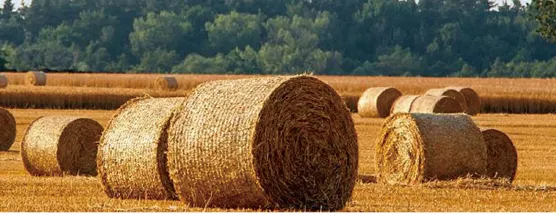
Five Advantages That Set This Square Baler Apart
Designed for operators who have outgrown what a standard square baler machine can do.
Handles Standing & Lodged Crops
The hammer-claw pickup is the only configuration in our range capable of processing upright or heavily lodged corn stalks, sorghum, and cotton material without a separate pre-cut pass. This is the defining capability of this machine versus every spring-tooth or rigid-tine square hay baler in the market. For corn belt operations and cotton-growing regions, it eliminates a full machinery operation from the post-harvest sequence.
Active Dust Removal at Pickup
The integrated negative-pressure fan removes soil contamination from the crop stream before it enters the compression cycle — not after baling is complete. Clean bales perform better in livestock feeding (better palatability), biomass processing (lower equipment wear), and straw recycling (higher quality feedstock grade). No post-processing sorting or cleaning step is needed at the receiving facility.
Superior Bale Density via Dual Crushing
Two-stage crushing breaks down hard stalks more completely than any single-pass system. The result is a denser, more stable bale with less spring-back after ejection. Dense big square hay bales cost less to transport per tonne, stack more stably in open storage, and have a longer shelf life in outdoor conditions where bale structure integrity matters for protection against moisture ingress.
Wide Crop Type Versatility
This machine handles the full spectrum: wheat straw, rice straw, corn stalks, sorghum, cotton stalks, alfalfa, fresh and dry herbage, and mixed forage. Moisture content tolerance spans 10%–23% for stalks and up to 23% for legume forage — broad enough to cover the normal range of field conditions encountered across one harvest season without stopping to adjust machine settings between crop types.
2200mm Swath Width at Commercial Scale
At 2200mm picking width and 2350kg machine weight, this is a big square baler built for commercial-scale throughput. For straw contractors, agricultural cooperatives, and large grain farms in Russia, Kazakhstan, and Korea operating on hundreds of hectares, the wide swath reduces the number of passes per field and keeps per-hectare operating costs competitive against round baler alternatives.
Materials & Build Standards
A machine designed for standing corn stalks at 2350kg gross weight operates under substantially higher mechanical stress than lighter straw-only balers. Build quality at the materials level is where that stress either stays manageable or becomes a chronic maintenance burden.
Main Chassis
Heavy-section welded steel box construction, designed to absorb the torsional and impact loads generated by hammer-claw pickup engagement with standing crop stalks. Weld integrity is inspected at critical joint locations during production — not just at final acceptance.
Hammer-Claw Elements
Forged high-carbon tool steel, hardened and tempered. Hammer-claw elements are subject to significantly higher impact loads than conventional pickup tines — particularly when engaging standing stalks. Hardened tool steel extends service life substantially and reduces replacement frequency during intensive harvest seasons.
Crushing Mechanism
Dual-stage crushing rollers or flails are built from wear-resistant alloy steel. The crushing surfaces encounter some of the hardest material in the machine's operating cycle — dried corn or sorghum stalks are abrasive and dense. Alloy steel construction at these contact points is not optional engineering; it is the baseline requirement for multi-season service life.
Compression Chamber
Hardened wear-plate lining throughout the 460×360mm bale channel and compression surfaces. The chamber geometry produces a standard-format rectangular cross-section compatible with existing bale-handling and storage infrastructure globally. Hardened liner plates defer the most costly in-season repair event — chamber wear-through — significantly past the typical first-service interval of unhardened alternatives.
Application Scenarios
This square baler covers a wider range of post-harvest crop conditions than any conventional square hay baler in its class.
🌽 Standing & Lodged Corn Stover
Corn stover that remains standing or heavily lodged after combine harvest is typically left unprocessed by farms without specialized equipment. This machine picks it up directly. The hammer-claw mechanism engages upright stalks, pulls them through the feed channel, and passes them to the dual-stage crushing unit — all in a single forward pass. No pre-cutting tractor pass required.
🌾 Wheat & Rice Straw in High-Volume Operations
For straw contractors and agricultural cooperatives managing large-scale cereal straw recovery across Eastern Europe, Russia, and Korea, the 2200mm picking width and ≥73.5kW power requirement position this as the best square hay baler option for high-throughput commercial operation. Wider swath, faster field coverage, lower cost per bale at scale.
🌿 Cotton Stalk Recovery
Cotton stalks present handling challenges for most square hay baler machines — they are coarse, woody, and often standing after defoliation. The hammer-claw pickup and dual-stage crushing combination handles cotton stalk material that would jam or damage lighter-duty baler configurations. The negative-pressure fan removes the fine soil and cotton fiber dust that contaminate bales in cotton-field conditions.
🐄 Alfalfa & Fresh Forage Baling
This machine performs equally well on fresh and dry herbage, alfalfa, and mixed gramineous forage at the moisture contents typical for livestock feed baling. The dust-removal function is particularly valuable for alfalfa baling, where soil-contaminated bales cause palatability issues and reduce feed intake in dairy and beef cattle operations — a direct economic loss that clean bales eliminate.
♻️ Biomass Fuel & Industrial Straw Supply
Biomass power plants, paper pulp producers, and mushroom substrate manufacturers increasingly require contracted straw and crop residue in uniform, high-density, low-contamination bale formats. The dual-crushing, dust-removing square bale output from this machine meets the feedstock quality requirements of industrial buyers in ways that bales from conventional large square balers frequently do not.
Regulatory & Compliance Framework
Operating this square baler across international markets requires familiarity with differing safety and machinery certification requirements by region.
South Korea — KS B ISO Standards
Agricultural machinery sold in Korea must meet KS B ISO 4254 general safety requirements and KS B ISO 11684 safety sign specifications. The ≥73.5kW power class of this machine requires careful PTO shaft selection; Korean buyers should verify compliance of the PTO shaft with KS B 6024 guarding requirements and confirm current provincial operating registration requirements for commercial-scale machinery before field deployment.
European Union — CE / Machinery Directive 2006/42/EC
For EU markets including Germany, France, and the Netherlands, this square baler as a towed agricultural implement falls under Machinery Directive 2006/42/EC. CE marking requires a risk assessment, technical file, and compliance of PTO shaft shielding with EN 1152 and EN 12965. Given the higher power class (≥73.5kW) and additional mechanisms (fan, dual crusher), buyers in EU markets should request a full compliance package before import.
Russia, Belarus & Kazakhstan — EAEU TR
Within the Eurasian Economic Union, TR EAEU 010/2011 on machine safety and TR EAEU 018/2011 on wheeled vehicle safety govern commercial agricultural machinery. Russian importers additionally require GOST R certification for commercial sales. For operations in Kazakhstan, local agricultural machinery registration with the Ministry of Agriculture may be required. Confirm current documentation requirements with your customs broker prior to shipment.
Global PTO Safety — ISO 500 & ISO 11684
ISO 500 defines PTO shaft dimensions and rotational speed standards (540rpm / 1000rpm) that ensure tractor-implement compatibility across manufacturers and markets. This square baler operates on the standard 540rpm PTO at ≥73.5kW. Always confirm your tractor's PTO rating matches the machine's minimum power requirement before field engagement — operating below minimum power at high crop throughput is a primary cause of drivetrain component failure.
One-Stop Component Supply
Running a high-power square baler at commercial scale means drivetrain components bear significant sustained load. We supply matched replacements built to the same specifications as original equipment — no adaptation, no guesswork.
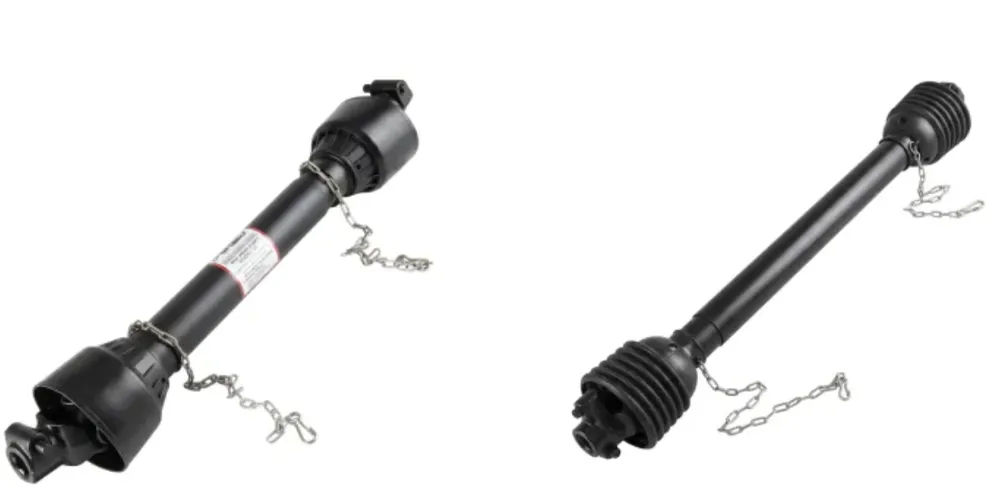
PTO Drive Shaft
At ≥73.5kW, the PTO shaft in this system carries some of the highest torque loads in any towed agricultural implement. An undersized or worn shaft is not a nuisance — it is a safety hazard. Our EP PTO Shaft for square balers is rated for this power class, with slip-clutch overload protection built in. Available in custom lengths for different tractor configurations. Stocking a spare shaft before the season opens eliminates the longest lead-time item in a mid-harvest breakdown scenario.
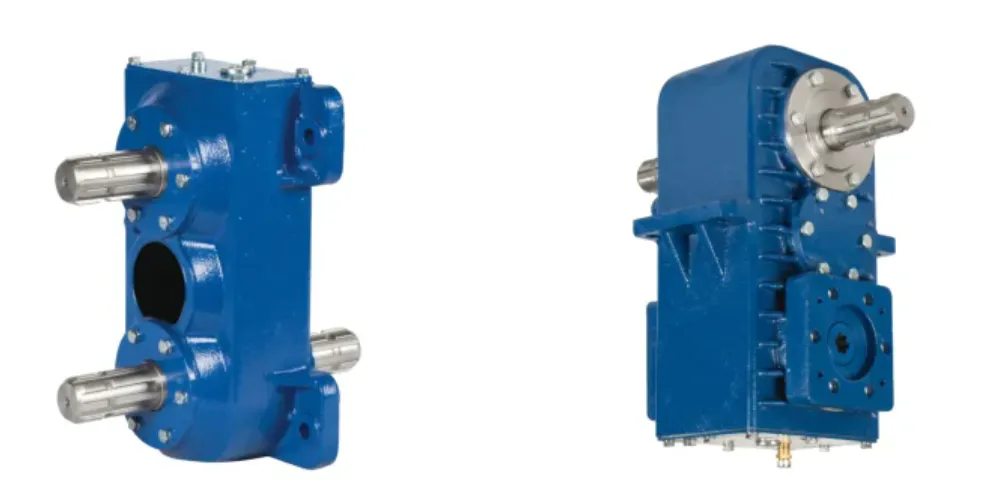
Square Baler Gearbox
The gearbox distributes PTO input power across all driven mechanisms in the machine — pickup, crusher, plunger, and knotters. In the ≥73.5kW power class, gearbox components experience loads that accelerate wear faster than in lighter machines. Our matched square baler gearbox units are dimensioned and rated for this specific power class — not generic agricultural gearboxes adapted to fit. Direct-fit replacement, no shimming or bore modification required.
About Us — A Decade of Baler Engineering
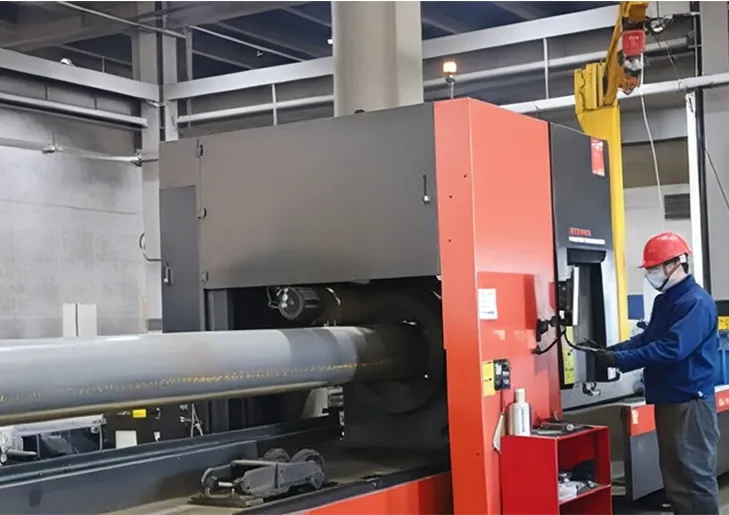
Developing a machine that handles standing corn stalks required more than drawing on standard baler design principles — it required input from the people who actually manage corn residue at scale: combine operators, straw contractors, and livestock managers dealing with the practical consequences of leaving crop residue in the field across multiple seasons.
We started in 2021 in a 2,000-square-meter workshop with a specific frustration to resolve: farms were forced to choose between machines priced beyond their margins or cheaper alternatives that consistently failed during the highest-pressure weeks of the harvest calendar. Neither option was acceptable. Our starting design brief was a machine that performed during peak demand and could be serviced by an operator with standard tools in the field.
The 32,000-square-meter modern facility and 2,000-unit annual output we operate today grew from that original intent. Our customer base now spans Mongolia, Russia, Belarus, and growing markets across Asia and Eastern Europe. The hammer-claw series represents the most technically advanced product in our square baler range — the result of iterating through actual field conditions, not just laboratory simulations.
Frequently Asked Questions
Questions from corn belt operators, straw contractors, and equipment procurement teams across Korea, Russia, and global markets.
Q1. How does a hammer-claw square baler pick up standing corn stalks without a separate chopping pass first?
The hammer-claw mechanism uses a rotating set of hardened claw elements that grab and pull standing or lodged crop material downward into the feed channel. Unlike spring-tooth or rigid-tine pickups that require material to already be flat and cut, the hammer-claw applies mechanical force directly to upright stalks. The crop is then immediately engaged by the dual-stage crushing unit before entering the compression chamber. No pre-cutting pass is needed, removing one full machinery operation from the workflow.
Q2. What tractor horsepower is needed to run this large square baler efficiently when baling corn stover in Korea or Central Asia?
This machine requires a minimum of 73.5kW — approximately 100 horsepower at the PTO. For commercial-scale corn stover baling with high throughput targets, tractors in the 110–130hp range are recommended to maintain consistent performance through dense material without repeated drive overload events. Running at the 100hp minimum is viable for lighter forage crops and rice straw but creates margin risk during high-load corn stover operations, particularly in humid or green-stalk conditions.
Q3. What is the difference between a hammer-claw square baler and a standard spring-tooth model when baling cotton stalks?
Spring-tooth pickups are optimized for material that is already cut, flat, and lying in a windrow. Cotton stalks are typically woody, upright after defoliation, and far too coarse for spring-tooth tines to handle without pre-processing. The hammer-claw mechanism can engage cotton stalks directly from their standing position, grip them, and pull them into the crushing mechanism. The difference in practical terms is that a cotton farm using a spring-tooth square hay baler needs to run a separate stalk cutter first — the hammer-claw machine does not.
Q4. How does the negative-pressure fan on this square baler improve bale quality for livestock feeding operations?
The fan creates suction at the pickup stage that pulls fine soil particles, sand, and chaff out of the crop stream before they enter the compression chamber. Bales produced with less soil contamination have meaningfully better palatability — livestock select cleaner feed over contaminated material at measurable rates. For dairy operations where feed intake directly correlates with milk production, the value of clean bales is straightforward to calculate. The dust-removal function also reduces equipment wear at biomass processing facilities that receive baled straw as feedstock.
Q5. How many square bales of hay or corn stover per acre can I expect from this big square baler in commercial operation?
Bale count per acre depends primarily on standing crop biomass density. For corn stover at typical temperate yields with the 460×360mm bale cross-section, commercial operators commonly report 20–40 bales per acre depending on stalk density and moisture content. How many square bales of hay per acre from wheat straw is generally 15–28 at similar conditions. Rice straw in high-yield paddy regions typically exceeds these figures due to higher per-hectare biomass. Local agronomic yield data is the most reliable basis for site-specific estimates.
Q6. How does this big square baler compare to a large round baler when processing corn stover for biomass supply contracts?
For biomass supply contracts, the square format consistently outperforms round bales on logistics cost. Square bales stack flat with no dead volume in transport vehicles — round bales leave curved gaps that reduce effective payload per truck or rail car. The difference between round and square hay bales in transport utilization is typically 15–25% more payload per vehicle in the square format. For contracts priced at per-tonne delivery cost, that gap directly affects margin. The added dust-removal and crushing features of this machine further improve feedstock quality acceptance rates at biomass facilities.
Q7. What slope conditions can this square baler machine handle safely in hillside or terraced farmland?
This machine is rated for operation on field slopes up to 8 degrees. Beyond that threshold, stability of the towed implement and safe tractor operation on slopes become the limiting factors — operating above 8° increases the risk of lateral slip and load shift on the bale channel that can affect knotter timing and bale density consistency.
Editor: PXY