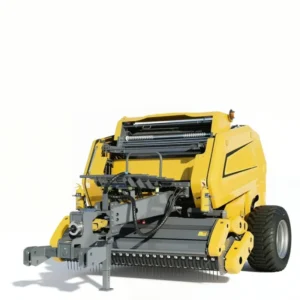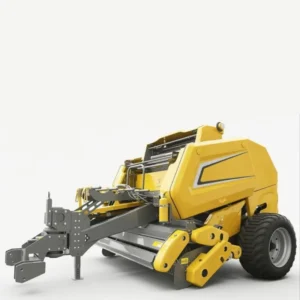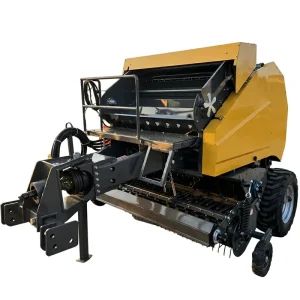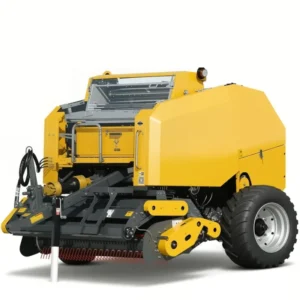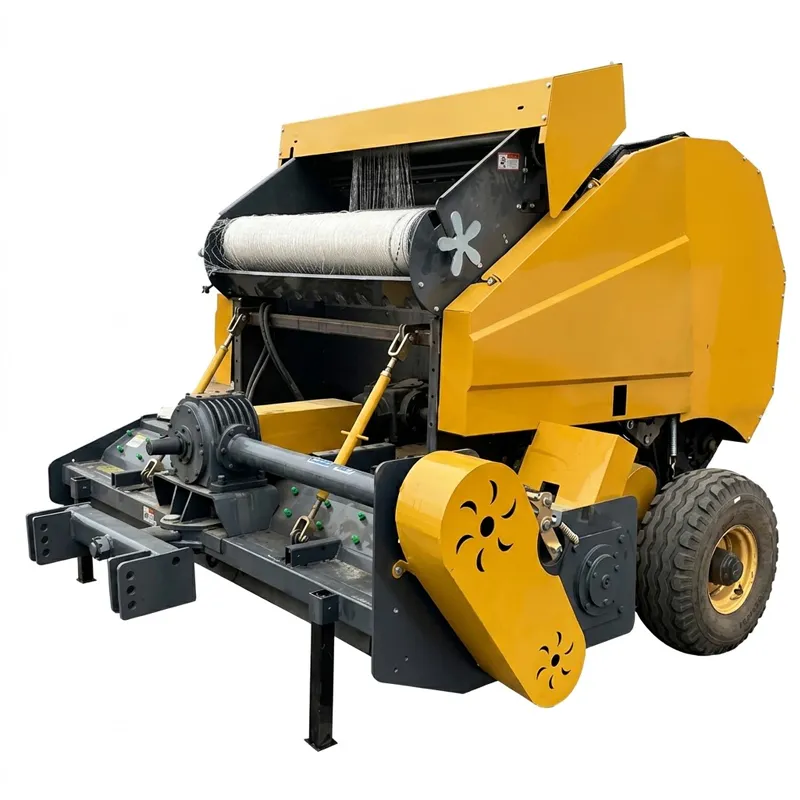
EP-2950×2750×2050 Spring Tooth Type Round Baler
O EP-9YQ-2300 Spring Tooth Round Baler is a heavy-duty trailed machine engineered for high-efficiency forage harvesting. It features a wide 2300mm spring tooth pickup and a specialized feeding system combining a shift fork mechanism with a screw continuous feeder to ensure smooth crop intake. The roll drum compression chamber, equipped with 18 pressing rollers (Φ190mm), produces dense round bales measuring 1000mm in diameter and 1250mm in width. The unit includes automatic net wrapping for secure bundling. Designed for robust performance, it requires a matching power range of 58.8–132.5 kW. Measuring 2950×2750×2050mm and weighing 2500kg, this baler is ideal for large-scale agricultural operations demanding reliability and high throughput.
Agricultural Round Baler · Spring Tooth Pickup · 2300 mm Picking Width
EP-2950×2750×2050 Spring Tooth Type Round Baler
A mid-size towed agricultural round baler combining dual-mode feeding, roll drum compressing, and automatic net wrapping — engineered for year-round hay and straw operations across Korea and global export markets.
Technical Specifications
The table below sets out the full parameter sheet for the EP-2950×2750×2050 round baler machine. When planning tractor pairing, remember that how many HP you need to run a round baler depends not only on peak draw but on sustained PTO load across a full working shift in varied conditions. The 58.8–132.5 kW range listed here is the continuous operating envelope, not just a start-up figure.
| HAYIR. | Öğe | Birim | Özellikler |
|---|---|---|---|
| 1 | Model Adı | — | EP-2950×2750×2050 Round Baler |
| 2 | Hitching Method | — | İzlendi |
| 3 | Picking Width | mm | 2300 |
| 4 | Feed Inlet Width | mm | — |
| 5 | Picker Structure | — | Spring Tooth Type |
| 6 | Feeder Structure | — | Shift Fork Feeding Mechanism + Screw Continuous Feeding Mechanism |
| 7 | Type of Compressing Bale Chamber | — | Roll Drum Type |
| 8 | Width of Compressing Room | mm | 1250 |
| 9 | Diameter of Compression | mm | Φ1000 |
| 10 | Quantity of Roll-Pressing Working Components | pc | 18 |
| 11 | Diameter of Roll-Pressing Roller | mm | Φ190 |
| 12 | Bundling Type | — | Automatic Net Wrapping |
| 13 | Matching Power Range | kW | 58.8 – 132.5 |
| 14 | Overall Dimension (L×W×H) | mm | 2950 × 2750 × 2050 |
| 15 | Makine Ağırlığı | kilogram | 2500 |
What Is a Round Baler — and Why Does Picking Width Matter?
A yuvarlak balya makinesi is a trailed agricultural machine that picks up cut and windrowed crop material, compresses it inside a rotating drum chamber, and wraps the resulting cylindrical bale for field-side storage or transport. The EP-2950×2750×2050 is a compact yet capable round baler machine built around a 2300 mm spring tooth pickup — one of the wider intake widths in its weight class. This broad sweep allows the machine to collect wider windrows in a single pass, reducing total field passes and fuel consumption per bale without upsizing to a heavier tractor.
People often ask what is the purpose of a round baler in practical farming terms. The answer is straightforward: it converts loose post-harvest residue or standing forage into dense, handleable units. A finished round bale of hay typically weighs between 300 and 600 kg depending on crop moisture and compression diameter — a format that suits loader-based feeding on livestock farms and long-distance transport by flat-bed trailer. This model produces bales at Φ1000 mm diameter by 1250 mm wide, a size well-suited to dairy, beef, and mixed farming operations where round hay bales are used as the primary winter fodder buffer.
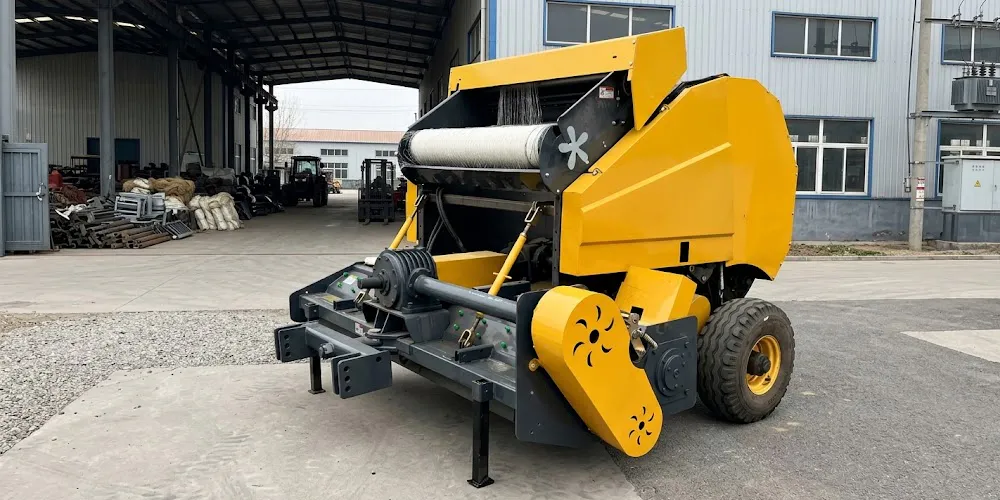
Five Key Performance Advantages
The spring tooth ficker structure handles brittle, thin-stemmed crops with less breakage than rigid tine alternatives. At 2300 mm, the pickup covers wide windrows left by combine headers in a single sweep, cutting the number of passes required and keeping field compaction to a minimum. This matters particularly in wet spring conditions common across Korea's paddy-adjacent uplands.
Unlike single-mode feeders, the combined shift fork and screw continuous feeding mechanism manages both heavy, tangled crop loads and lighter, dry material without changing settings. The shift fork breaks up dense mat formations before the screw mechanism evenly distributes material across the full width of the bale chamber, preventing uneven roller loading that causes premature wear on round baler parts.
The roll drum bale chamber uses 18 independently rotating Φ190 mm rollers to build even compression from the core outward. This produces a bale with consistent density throughout rather than a soft center — critical when bales are stacked or stored outdoors without permanent shelter, conditions typical on farms in Russia, Mongolia, and the Korean peninsula's northern inland regions.
The machine wraps using round bale net wrap with an integrated sensor that counts loop passes and triggers an automatic cut when the preset wrap count is reached. This removes operator judgment from the net application stage, reducing net waste and ensuring consistent bale integrity across an entire day's output. The handheld touchscreen gives the operator both automatic and manual override capability.
The 58.8–132.5 kW compatible power range — roughly 80 to 180 HP — gives this agricultural round baler genuine versatility across different tractor fleets. Smaller family farms running 75–90 HP tractors can operate it comfortably in lighter crops, while larger commercial operations can run at full throughput with mid-size tractors. This flexibility reduces the barrier to ownership for farms that don't yet justify a dedicated high-horsepower baling tractor.
How This Round Baler Operates
The EP-2950×2750×2050 follows a staged, electronically monitored process from ground pickup through bale ejection. The spring tooth pickup at 2300 mm width lifts windrowed material continuously and passes it into the dual-mode feeder. The shift fork breaks up dense crop mats first, then the screw continuous mechanism distributes this material uniformly across the 1250 mm-wide entry into the roll drum bale chamber. Inside, 18 Φ190 mm rollers rotate simultaneously, winding incoming crop around a self-forming core. As material layers accumulate, bale diameter grows toward the target Φ1000 mm. The integrated sensor system monitors diameter and compression force in real time.
Once the bale reaches the set diameter, the electronic control unit initiates the automatic net wrapping sequence. The sensor counts net loop passes and cuts the net cleanly once the programmed wrap count is complete. The hydraulic rear gate then opens, releasing the finished round bale, before closing automatically to begin the next baling cycle. The operator views all status information — current bale diameter, wrap count, cycle number — on the handheld color touchscreen without leaving the tractor seat. Both automatic and manual modes are supported, which is useful when switching between crop types mid-shift or when bale weight monitoring requires manual intervention.
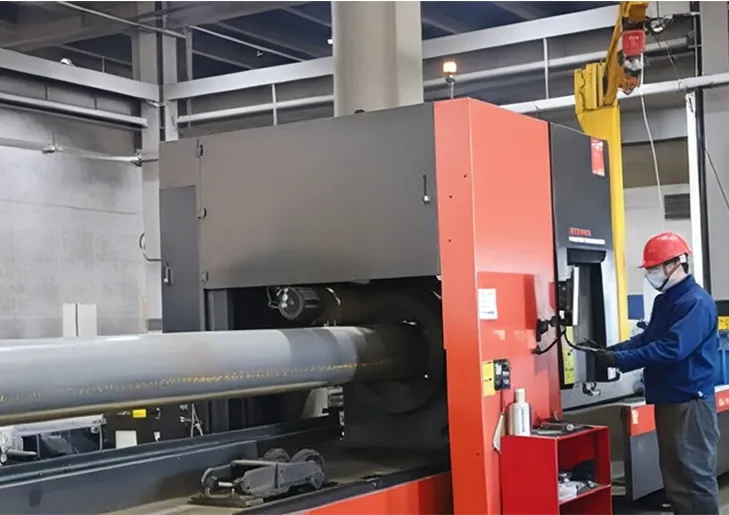
Materials and Construction
The mainframe and bale chamber enclosure are fabricated from heavy-gauge structural steel, fully welded at all stress-bearing joints. This construction gives the machine the rigidity needed to absorb the repetitive compression forces that build across a long baling shift, particularly in dense crop like wheat straw or corn stover where roller loading peaks sharply. The Φ190 mm pressing rollers carry a hardened surface finish that resists abrasion from gritty or sandy crop material — a common condition in dryland grain-growing regions of Russia and Mongolia.
The drivetrain — PTO input, internal gearbox, chain sets, clutch, and electronic control module — is built with components sourced from internationally recognized suppliers rather than unverified alternatives. This approach maintains consistent performance tolerances across the full power range and reduces the risk of unexpected failure during peak-season operation. The hydraulic pickup height adjustment system is sealed against crop dust ingress and offers adjustable float sensitivity, allowing the pickup to track undulating terrain without operator intervention. External surfaces receive a corrosion-inhibiting primer and field-grade topcoat suitable for outdoor inter-season storage in the variable climates found across Northeast Asia and the Eurasian steppe.
Round Baler Application Scenarios
O round baler application envelope for the EP-2950×2750×2050 spans the major post-harvest and forage management use cases found across commercial grain farms, livestock operations, and agricultural contracting businesses. The 58.8–132.5 kW power range gives it relevance across a wider range of farm sizes than machines requiring 150 kW or above.
The 2300 mm spring tooth pickup handles dry grain straw effectively without excessive stem breakage. After combine harvest, the machine clears residue windrows quickly, creating storable bales that reduce field preparation time before the next planting cycle. This use case is highly relevant across Korea's rice-growing lowlands and Russia's vast wheat belt.
As a round hay baler, the spring tooth structure lifts delicate legume forage with lower leaf shatter rates than rigid finger pickups. Net wrapping seals the outer bale surface against rain penetration, which is critical for maintaining the nutritional value of alfalfa bales stored in fields with no permanent roof cover — a situation common on livestock farms across Mongolia and rural Korea.
The dual-mode feeder is specifically suited to the tangled, fibrous nature of corn stover and sorghum stalks. The shift fork separates dense mat layers before the screw feeds them into the compressing room, preventing the feeder blockages that cause downtime in single-mode intake systems. Dense-pack bales from this crop type support biomass energy supply chains in regions where this residue has commercial value.
At Φ1000 mm × 1250 mm, the bale format produced by this machine suits medium-sized cattle and dairy operations where round hay bales are handled with a front-loader or bale unroller. The compact bale size is easier to move and position than larger-diameter bales, making it practical for farms without dedicated bale-handling attachments on every tractor in the fleet.
For contractors running multiple farms in a single season, the machine's manageable weight of 2500 kg and broad tractor compatibility make it easy to transport between sites with a standard farm trailer. The touchscreen monitoring system simplifies handover between operators, and the automatic baling cycle reduces skill dependency — an advantage when running a mixed crew during peak baling windows.
Compatible System Components
Running a complete, matched baling system reduces the risk of drivetrain mismatches that accelerate wear on both the tractor and the baler. We supply key accessory components sized and rated for this baler series — supporting one-stop procurement for dealers and farming operations that want to avoid the sourcing complexity of mixing brands.
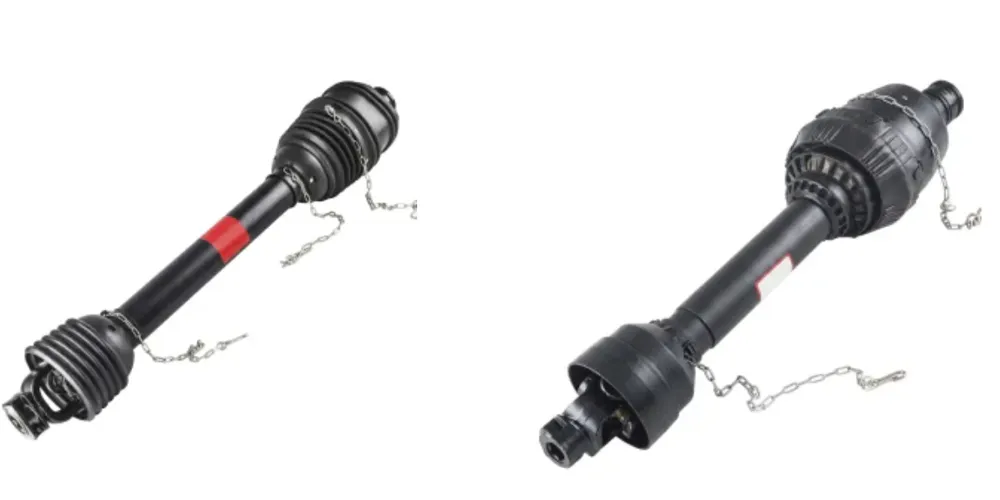
The PTO shaft is the most direct mechanical link between tractor and baler. A properly matched shaft ensures correct torque transmission at the PTO speed this baler is rated for, while also providing the angular flexibility needed when the tractor turns at headlands. We supply purpose-built PTO Shafts for Round Balers dimensioned to match the input shaft and operating torque of this model series — avoiding the misalignment and vibration issues that arise from generic off-the-shelf alternatives.
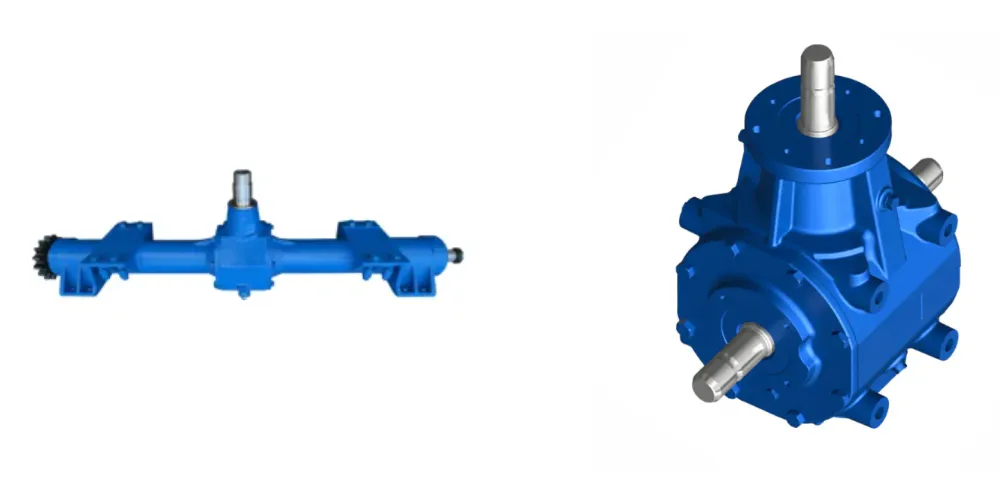
O round baler gearbox manages power distribution from the PTO input to the pickup, feeder, and bale chamber roller drives. Wear in this component is one of the most common causes of mid-season downtime in towed baling systems. Our matched gearbox units are rated for the torque cycles generated by dual-mode feeding in dense crop conditions, and are compatible with the drivetrain layout of the EP-2950×2750×2050 series without modification. System reliability improves significantly when gearbox, shaft, and baler are all sourced as a matched set.
Who We Are
Our team is made up of mechanical engineers, working farmers, and field service technicians — people whose understanding of post-harvest residue management comes from seasons of hands-on work alongside growers, not from reading spec sheets. When a round baler stalls mid-field during a narrow harvest window, we know what that costs in time, crop quality, and contractor reputation.
What started as a 2,000 m² production workshop has grown into a 32,000 m² intelligent manufacturing facility over more than a decade of mechanical engineering experience. We scaled annual output from 100 units to 2,000, and our export network now reaches Mongolia, Russia, and Belarus — alongside a growing dealer base across South Korea and Southeast Asia. Our founders saw a clear gap: too many farms were caught between overpriced machines from established brands and cheaper alternatives that couldn't hold up through a full baling season. This product line was built to occupy that gap with a machine that performs reliably at a realistic cost of ownership.
Every agricultural round baler that leaves our floor goes through structured pre-shipment inspection, and our parts supply chain supports regional dealers with the spare parts availability needed to keep machines running between scheduled service intervals — regardless of where in the world the machine is operating.
Frequently Asked Questions
What type of spring tooth round baler works best for mixed hay and straw operations on small to mid-size farms in South Korea?
For farms in Korea managing both paddy straw and upland hay in the same season, a mid-range spring tooth round baler with a dual-mode feeder is typically the most adaptable choice. The spring tooth pickup handles dry straw cleanly, while the combined shift fork and screw feeding mechanism transitions between dense and light crop loads without requiring manual feeder adjustment. A Φ1000 mm bale diameter is practical for farms using standard front-loaders for bale handling, as the smaller bale size is easier to move and stack without specialist attachments.
How much does a round bale of hay typically weigh when produced by a machine with a 1000 mm compression diameter?
A round bale produced at Φ1000 mm diameter in a 1250 mm wide bale chamber typically weighs between 280 and 450 kg depending on crop type and moisture content. Dry wheat straw bales sit toward the lighter end of that range, while alfalfa or grass hay at 15–20% moisture will produce denser, heavier bales. When operators ask how much does a round bale of hay weigh in practical planning terms, a working estimate of 350 kg per bale is reasonable for dry grass hay in this diameter class — useful for calculating trailer payload and loader lift capacity.
Which agricultural round baler gearbox maintenance steps should a contractor follow when operating across Russia's harvest season?
During Russia's intensive grain harvest period, the round baler gearbox should be checked for oil level and seal condition at the start of each working week. Under high daily output conditions, chain tension across the gearbox output drives should be verified every 60–80 operating hours, and input shaft seal integrity monitored for early signs of lubricant leakage. Replacing gearbox oil at the manufacturer's recommended interval — rather than extending it through the season — significantly reduces the risk of thermal breakdown in the gearbox internals when the machine runs continuous long shifts during peak baling windows.
Where can I find compatible round baler parts for the EP-2950 series when operating in Mongolia or Central Asia?
We maintain an export parts channel that serves dealers and end users in Mongolia and Central Asia, covering the most frequently replaced components — pressing rollers, pickup spring teeth, chain sets, net wrap sensors, and PTO input shaft assemblies. Buyers should contact the export sales team with the machine model reference and a description of the required part. For operators in remote locations where parts logistics lead times are long, we recommend maintaining a seasonal spare parts kit covering the highest-wear items before the baling season starts rather than waiting for a failure to occur in the field.
When is the right time for a Korean livestock farm to switch from a mini round baler to a full-size agricultural round baler for hay production?
The transition from a mini round baler to a full-size agricultural round baler typically makes economic sense when a farm's annual bale output consistently exceeds 1,500–2,000 bales per season, or when the tractor fleet has grown to include at least one unit in the 60–90 kW range. A mini hay baler suits small paddock operations where a compact, lightweight machine avoids soil compaction issues, but its per-bale throughput is significantly lower than a machine with a 2300 mm pickup width. For Korean livestock farms that have scaled to 50+ head of cattle and are managing their own forage ground, the productivity difference of a full-size machine becomes measurable within two to three seasons of ownership.
Editör: PXY