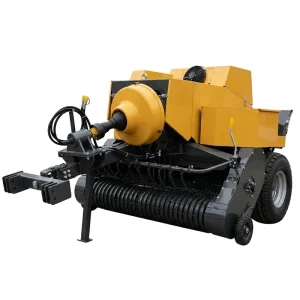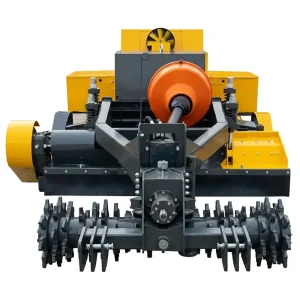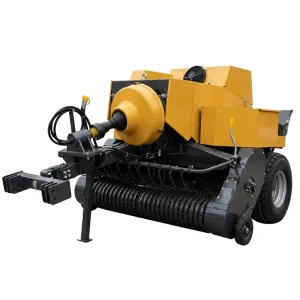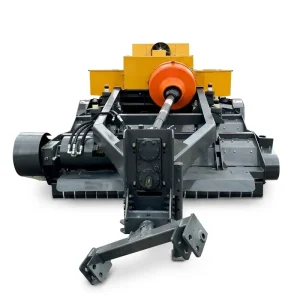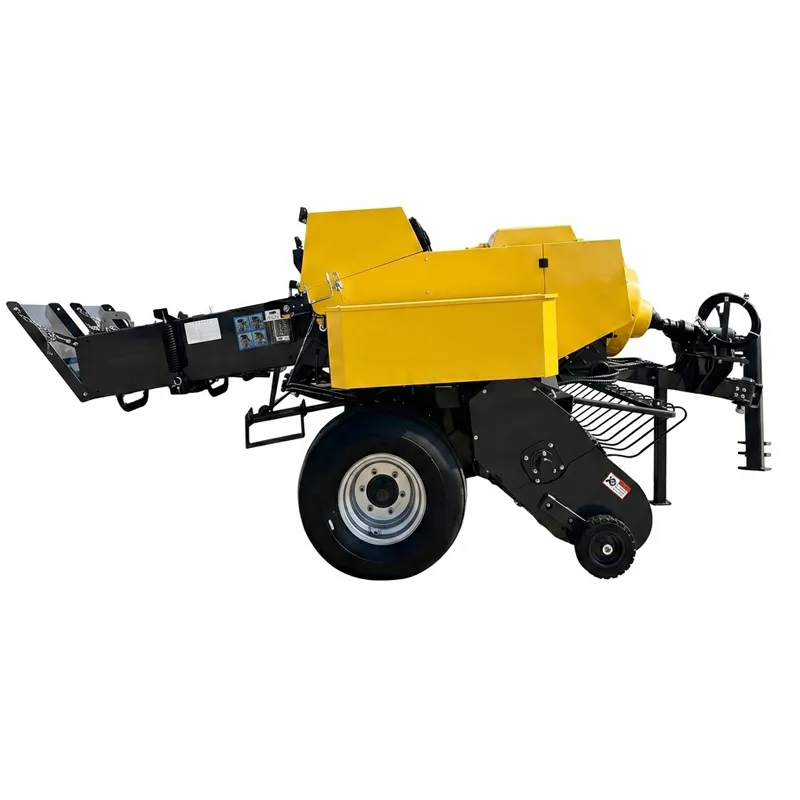
EP-5600×2780×1790(L×W×H) Spring Tooth Type Double-Compartment Square Baler
เดอะ EP-9YFS-2.2 Double-Chamber Square Baler is a high-efficiency trailed agricultural machine designed for robust hay and straw processing. Featuring a wide 2200mm spring tooth pickup, it ensures thorough collection of crop residue. The machine utilizes a fork feeding mechanism and is equipped with two D-type knotters (2×2 configuration) for reliable automatic rope baling. It produces dense square bales with a compression chamber size of 460×360mm (dual chamber). Requiring a matching power of ≥51.5 kW, this durable unit measures 5600×2780×1790mm and weighs 3115 kg, making it an ideal solution for large-scale farming operations seeking consistent baling performance.
EP-9YFS-2.2 | 5600×2780×1790 mm (L×W×H) Spring Tooth Type 2200 mm Picking Width Double-Compartment Square Baler
The EP-9YFS-2.2 is a trailed, large square baler engineered for high-output post-harvest operations. Equipped with a 2200 mm spring tooth picking width, a fork feeding mechanism, and dual D-type knotters arranged in a 2×2 configuration, it forms two 460×360 mm bale cross-sections simultaneously — cutting field passes in half and dramatically lowering labour cost per tonne of material baled. Designed for tractors supplying ≥51.5 kW of PTO power, this square baler machine delivers production throughput that smaller single-chamber units simply cannot match during the narrow seasonal baling window. Whether you are managing cereal straw across the Korean peninsula, harvesting alfalfa in Central Asia, or baling silage crop residues in Eastern Europe, the 9YFS-2.2 offers the combination of bale density, field reliability, and mechanical robustness that modern large-scale farms demand.
Technical Specifications
All values below are extracted from the 9YFS-2.2 production specification. Confirm compatibility with your tractor's PTO output and hitch geometry before ordering. OEM configurations with altered chamber sizing or knotter count are available on request.
| เลขที่ | Parameter | หน่วย | ข้อกำหนด |
|---|---|---|---|
| 1 | ชื่อรุ่น | — | 9YFS-2.2 Double-Chamber Square Baler |
| 2 | Hitching Method | — | ติดตาม |
| 3 | Picking Width | มม. | 2200 |
| 4 | Feeding Inlet Width | มม. | — |
| 5 | Picker Structure | — | Spring Tooth Type |
| 6 | Feeder Structure | — | Fork Feeding Mechanism |
| 7 | Knotter Type | — | D-Type |
| 8 | Number of Knotters | pc | 2×2 |
| 9 | Compression Chamber Section (W×H) | มม. | 460×360×2 |
| 10 | วิธีการอัดก้อน | — | Automatic Rope Baling |
| 11 | Matching Power Range | กิโลวัตต์ | ≥51.5 |
| 12 | Overall Dimension (L×W×H) | มม. | 5600×2780×1790 |
| 13 | น้ำหนักเครื่องจักร | กก. | 3115 |
Dimensions shown as Length × Width × Height in millimetres. Weight is approximate and may vary by optional equipment configuration.
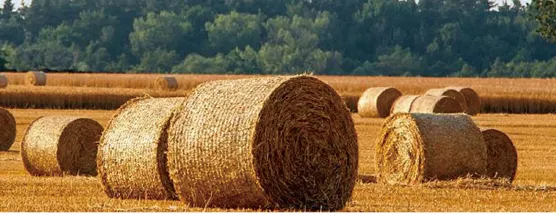
What Is a Double-Compartment Square Baler?
A large square baler is a tractor-trailed machine that picks crop material from the windrow, compresses it into rectangular bales, and secures each bale with twine or rope before ejecting it to the field surface. Unlike conventional single-chamber square baler machines, the 9YFS-2.2 operates two compression chambers side by side, so each pass through the field produces twice the volume of finished bales. This double-compartment design is particularly valuable on large farms where labour availability during harvest is constrained and maximum throughput per tractor-hour is the primary operating target.
Square hay bales produced by this machine are denser, more stackable, and easier to handle with standard telehandlers and grab attachments compared with round bales. The compact bale geometry reduces transport volume and simplifies storage in barns with fixed bay widths. For Korean grain and forage farms, Mongolian pastoral operations, and Eastern European cereal growers alike, the structured rectangular form of a big square bale hay package remains the benchmark for mechanical handling efficiency. The 9YFS-2.2 brings that production standard to farms requiring ≥51.5 kW tractor power without requiring a dedicated high-horsepower machine in the 150 kW+ class.
Five Key Advantages
Two compression chambers operating in parallel double the bale output per field pass. On a 200-hectare wheat stubble block, this can compress a multi-day single-baler operation into a single day, reducing fuel and labour costs proportionally.
The wide 2200 mm spring tooth picking head cleanly lifts dense or tangled windrows with minimal crop loss, even on uneven ground. Spring teeth follow field contours and self-clear blockages better than rigid tine systems in wet or lodged crop conditions.
The fully automatic rope baling mechanism reduces operator involvement during the tying cycle, cutting task interruptions and lowering the risk of missed or incomplete knots. Consistent tie tension across every bale improves stack stability during transport and outdoor storage.
Four D-type knotters — two per chamber — produce a secure, symmetrical tie pattern on every bale. D-type knotters are recognised across the global square hay baler industry for reliable knot formation across a wide range of twine types, moisture levels, and crop densities.
The ≥51.5 kW power requirement is accessible to a wide range of mid-range and large tractors commonly found on Korean, Mongolian, Russian, and Belarusian farms, avoiding the need to invest in a dedicated high-horsepower unit solely for baling duty.
How Does a Square Baler Work?
The 9YFS-2.2 operates on the same fundamental sequence as any square baler machine, scaled up for dual-chamber production. As the tractor moves forward, the 2200 mm spring tooth pickup reel lifts crop material from the windrow and feeds it rearward through a fork feeding mechanism that pre-compresses and meters material into the two compression chambers simultaneously. Inside each chamber, a reciprocating plunger driven by the tractor PTO shaft compresses successive charges of crop into a growing bale column.
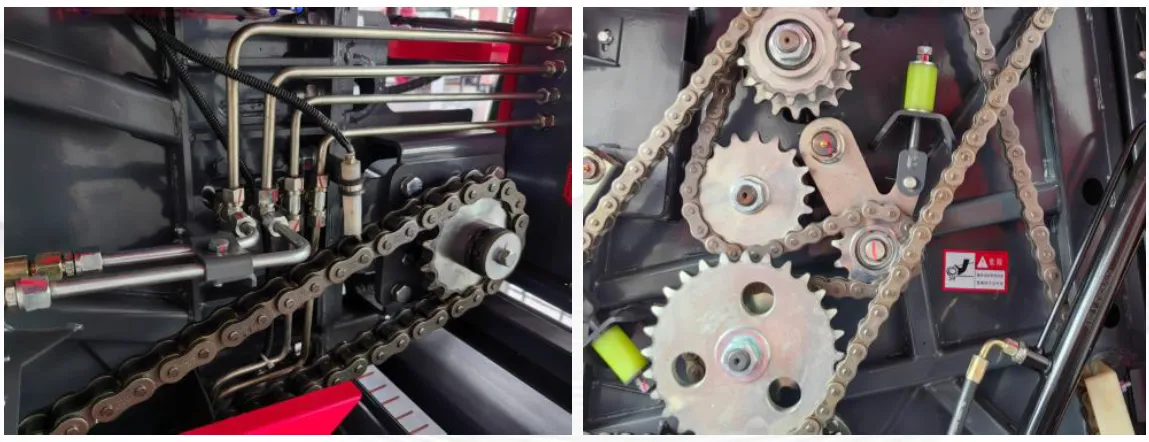
Once the bale reaches the set density — measured by a needle-sensing mechanism — the automatic rope baling system is triggered. The twine needles pass twine around the finished bale cross-section, and the D-type knotters tie and cut the twine in a coordinated two-step cycle. The finished bale is then ejected rearward from the chamber onto the field or into a following bale chute. Because both chambers cycle in near-synchrony, the operator and tractor workload remains smooth and continuous, without the stop-start interruptions typical of undersized single-chamber square hay balers. Tractor power is transmitted through the PTO shaft at 540 RPM, which drives the gearbox, flywheel, and knotter timing cam through a precisely timed drivetrain. Proper PTO shaft alignment and gearbox lubrication are critical for sustained operation — see the related products section below for compatible components.
Materials & Construction Quality
Main Frame
Heavy-section hot-rolled structural steel welded and reinforced at all high-stress nodes. The frame carries the full compression load of two plunger cycles simultaneously, requiring material selection and weld geometry that match or exceed the fatigue standards applied to single-chamber large square balers in the same power class.
Compression Plungers
Hardened steel plunger faces with replaceable wear plates. The plunger stroke and face geometry are matched to the 460×360 mm chamber cross-section to maintain uniform bale density across the full bale length, preventing soft ends that would collapse under telehandler grabs during loading.
Pickup Teeth & Auger
Spring steel pickup teeth heat-treated for resilience. The 2200 mm pickup width uses a high tooth count to ensure clean ground clearance over undulating terrain without scalping the soil. Teeth are individually replaceable to minimise downtime when stones cause localised damage — a critical field-serviceability consideration on Korean upland farm plots.
Knotter Mechanism
D-type knotters precision-machined from alloy steel with hardened bearing surfaces and calibrated bill hook timing. The knotter assembly is designed for straightforward field adjustment using standard farm tools, so operators across Mongolia, Russia, and Belarus can service knotters without specialist support visits.
Regulatory & Compliance Considerations by Region
Importing and operating a large square baler involves compliance with agricultural machinery regulations that vary significantly by jurisdiction. Understanding the relevant frameworks before purchase avoids customs delays and post-delivery legal complications.
South Korea
Agricultural machinery imported into Korea must comply with the Act on Safety Management of Agricultural and Fishery Machinery (농업기계화 촉진법). CE or equivalent type-approval documentation for towed machinery is advisable. Korea's Rural Development Administration (RDA) maintains a voluntary registration system for imported farm equipment; registered machines may qualify for subsidy programmes under the Agricultural Mechanisation Promotion Act.
European Union
Towed agricultural machinery sold into EU member states must comply with Machinery Directive 2006/42/EC (transitioning to EU Machinery Regulation 2023/1230 from January 2027). CE marking is mandatory. ISO 8210 and ISO 11684 address safety signage and operator-protection requirements specifically applicable to square baler machines.
Russia & EAEU
Machinery entering Russia, Kazakhstan, and other Eurasian Economic Union members must carry EAC (Евразийское соответствие) conformity marking under TR CU 010/2011 (Technical Regulation on Machinery Safety). Agricultural machinery is specifically listed under this regulation and requires third-party certification by an accredited EAEU body.
Mongolia
Mongolia follows a General Authority for Standardisation and Metrology (MASM) import registration process. Agricultural machinery above a set power threshold requires a technical inspection certificate upon arrival. Importers should request full Chinese or English-language manuals and parts lists to support in-country registration documentation.
Application Scenarios
The 9YFS-2.2 square baler is suitable across a broad range of crops and farm types. The dual-chamber design multiplies its value particularly in operations where time-on-field during harvest is limited by weather or labour availability.
Wheat & Rice Straw Baling — Korea & Japan
Post-harvest straw management on Korean and Japanese paddy and dryland cereal farms generates large volumes of residue that must be collected before the next crop establishment. The 2200 mm picking width efficiently handles the wide windrows left by combine harvesters, and the dual chambers keep the baling cycle close to the combine's working speed. Small square bales of hay or straw in the 460×360 mm cross-section are also easier to handle with the compact telehandlers common on Korean family farms.
Alfalfa & Grass Hay — Mongolia & Central Asia
Pastoral operations in Mongolia and neighbouring Central Asian states rely on large square hay bales for winter livestock feed storage. The dense bale produced by the 9YFS-2.2's plunger system minimises moisture infiltration during outdoor stacking — critical in climates where covered storage is limited. Square hay bales stack in stable columns that are accessible to livestock feeding operations throughout the winter months without mechanical handling equipment.
Corn Stover & Sunflower Residue — Russia & Belarus
Large arable farms in Russia and Belarus produce substantial volumes of corn stover and sunflower stalks after combine harvest. This material is coarser and heavier than cereal straw, placing greater demands on the feeder and compression system. The fork feeding mechanism and high-torque plunger drive of the 9YFS-2.2 are specifically suited to these denser materials, while the automatic rope baling method maintains secure ties even when bale density varies due to material inconsistency.
Biomass & Energy Crop Collection
Miscanthus, switchgrass, and energy sorghum grown for biogas and biomass pellet production are increasingly baled using large square balers because the consistent bale geometry integrates directly with automated feeding systems at processing plants. The 9YFS-2.2's dual output gives biomass contractors the throughput to serve multiple farms within a contracted harvest window, maintaining supply continuity to off-take facilities.
Compatible Components & Related Products
Running a square baler at peak efficiency over a full season depends on the quality and compatibility of its drivetrain consumables. We supply the following components as a matched system — eliminating the compatibility guesswork that comes with sourcing parts from multiple suppliers.
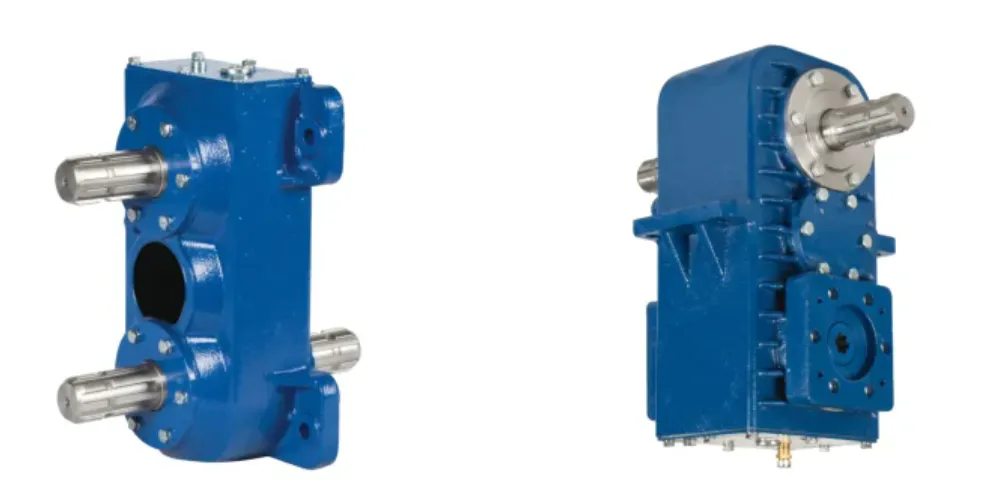
Square Baler Gearbox
The gearbox is the mechanical heart of any square baler machine, converting PTO rotary input into the timed, high-force reciprocating motion that drives the plunger, knotter cam, and feeder simultaneously. Our square baler gearbox range is engineered to the load cycles of double-chamber operation — matching the torque peaks generated when both plungers compress simultaneously at maximum density settings. Sourcing the gearbox and baler from the same production system removes interface uncertainty and simplifies warranty support.
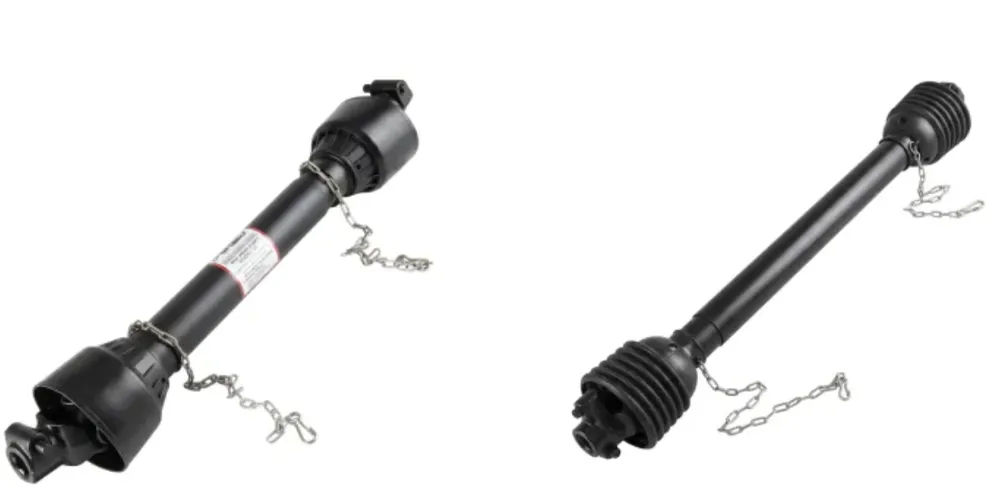
PTO Shaft for Square Balers
Connecting the tractor to the baler gearbox through a correctly rated, properly shielded PTO shaft is a safety and performance requirement — not an option. An undersized shaft fails under the torque spikes of dual-plunger operation; an incorrectly shielded shaft creates a serious entanglement hazard that violates machinery safety directives in Korea, the EU, and the EAEU. Our PTO Shaft for Square Balers series is rated and guarded to match the 9YFS-2.2's power range, with CE-compliant shielding for markets requiring it.
About Us — Built by People Who Understand Harvest Pressure
Our team is made up of engineers, working farmers, and service technicians who understand post-harvest residue management from direct experience in the field — not from product catalogues. We saw too many farms caught between overpriced premium imports and underbuilt budget machines that broke down during the critical baling window.
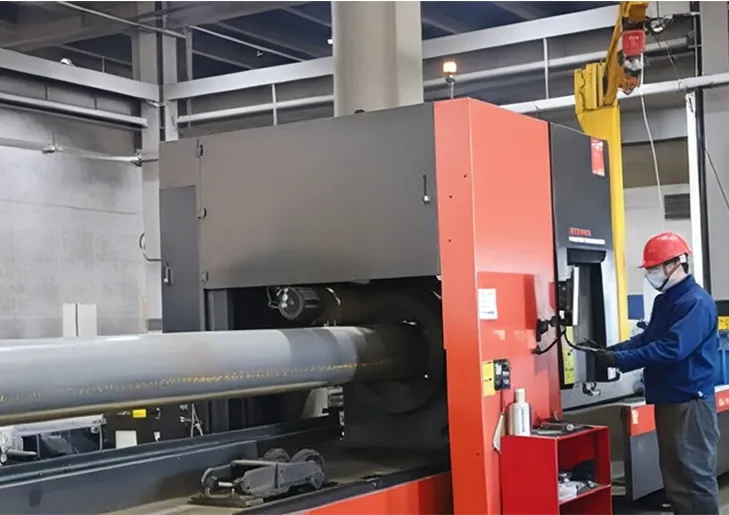
What started as a 2,000 m² workshop at our founding in 2021 has grown into a 32,000 m² intelligent production facility. Annual output has scaled from 100 to 2,000 units, and our distribution network now reaches Mongolia, Russia, and Belarus alongside domestic markets. Every machine that leaves the production floor carries over a decade of accumulated mechanical expertise from the engineering and service team behind it.
Standard catalogue machines, OEM custom configurations, and private-label arrangements are all available. We work with importers, agricultural dealers, and large farm operations directly — from initial specification through volume delivery and ongoing parts support.
Frequently Asked Questions
บรรณาธิการ: PXY