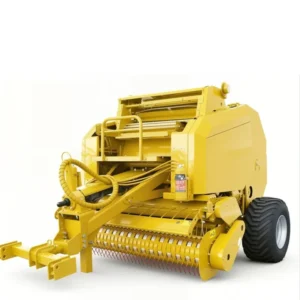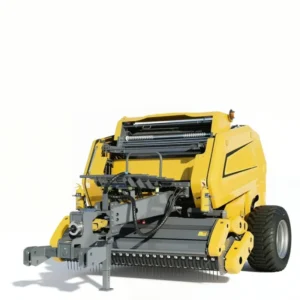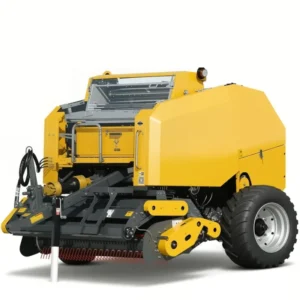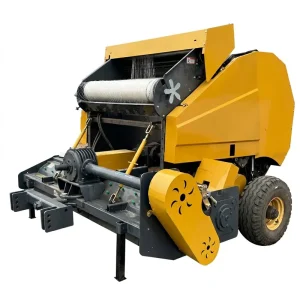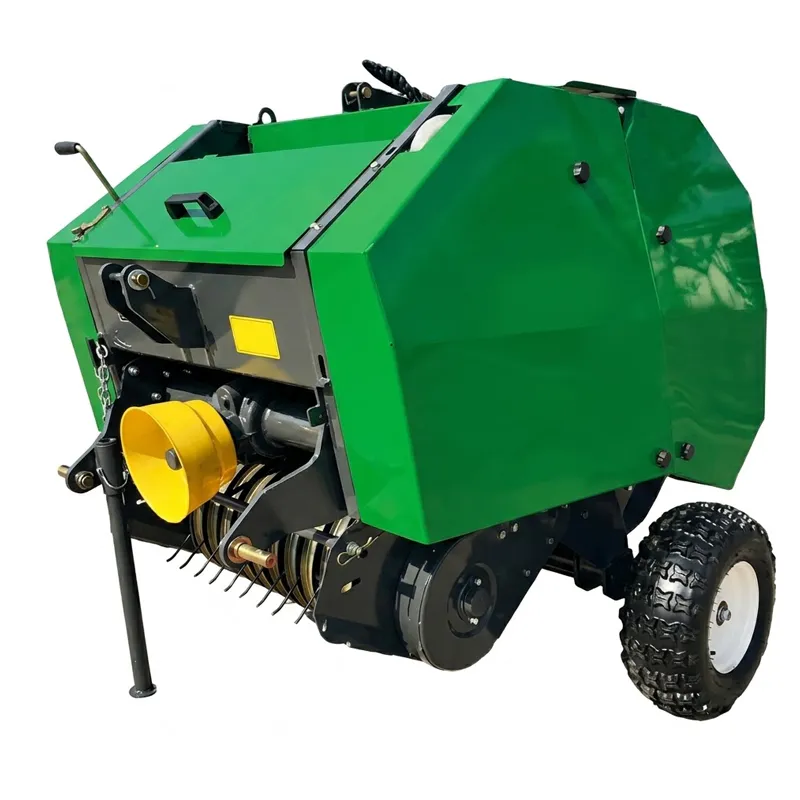
EP-Φ630×700 Spring Tooth Type Round Baler — 800 mm Picking Width
The EP-9YK-870 Spring Tooth Round Baler is a lightweight, trailed agricultural machine designed for efficient small-scale forage harvesting. It features an 800mm spring tooth pickup that feeds crops directly into the chamber, ensuring a simple and effective intake process. The roll drum compression chamber forms dense round bales measuring 630mm in diameter and 700mm in width, secured by a reliable rope wrapping system. With an operating speed of 2–5 km/h and a compact footprint of 1300×1300×1350mm, this 440kg unit is highly maneuverable. It requires a matching power range of 25–50 hp and a PTO speed of 540 rpm, making it an ideal, cost-effective solution for small farms and orchards with limited tractor power.
Mini Round Baler · Spring Tooth Direct Feed · Φ630×700 Bale Size
EP-Φ630×700 Spring Tooth Type Round Baler — 800 mm Picking Width
A compact, lightweight mini round baler engineered for small-plot farming, orchard operations, and hobby farms — delivering tractor-compatible baling from just 25 HP, with rope wrapping and direct spring tooth feed at 440 kg machine weight.
Technical Specifications
The full parameter sheet for the EP-Φ630×700 mini round baler is listed below. When pairing with a tractor, confirm that the PTO output is rated at 540 rpm — this is the standard matched PTO speed for this model. Operators asking how many HP do you need to run a round baler of this type can work confidently with any tractor in the 25–50 HP range.
| نہیں | آئٹم | یونٹ | تفصیلات |
|---|---|---|---|
| 1 | ماڈل کا نام | — | EP-Φ630×700 Round Baler (Model 870) |
| 2 | Hitching Method | — | ٹریلڈ |
| 3 | Picking Width | ملی میٹر | 800 |
| 4 | Picker Structure | — | Spring Tooth Type |
| 5 | Feeder Structure | — | Directly Feed by Spring Tooth |
| 6 | آپریٹنگ سپیڈ | کلومیٹر فی گھنٹہ | 2 – 5 |
| 7 | Type of Compressing Bale Chamber | — | Roll Drum Type |
| 8 | Width of Compressing Room | ملی میٹر | 700 |
| 9 | Diameter of Compression | ملی میٹر | Φ630 |
| 10 | Bundling Type | — | Rope Wrapping |
| 11 | Bale Size (Diameter × Width) | ملی میٹر | Φ630 × 700 |
| 12 | Overall Dimensions (L×W×H) | ملی میٹر | 1300 × 1300 × 1350 |
| 13 | Tire Size | — | 18×6.50-8-4PR |
| 14 | مشین کا وزن | کلو | 440 |
| 15 | Matching Power Range | hp | 25 – 50 |
| 16 | Match the PTO Speed | rpm | 540 |
What Is a Mini Round Baler — and Who Actually Needs One?
A گول بیلر compresses cut forage or crop residue into cylindrical bales that are easy to handle, store, and feed. The EP-Φ630×700 is a purpose-built mini round baler designed for operations where a full-size agricultural round baler would be overkill — either because the tractor fleet tops out at 50 HP, the fields are small and irregular, or the annual bale output doesn't justify a heavier investment. With an 800 mm picking width and a machine weight of just 440 kg, this small round baler connects to compact utility tractors and handles a wide range of field conditions without requiring specialist operators or dedicated high-power drivetrains.
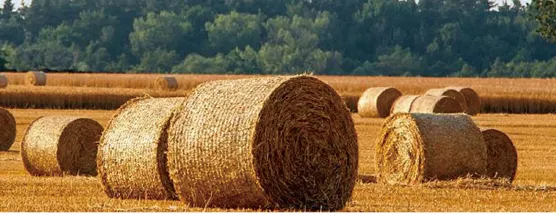
People often ask what is a round baler used for in the context of smaller farming setups. Here the answer includes orchards where grass cover crops need clearing between tree rows, hobby farms managing a few acres of hay, market gardens dealing with post-season crop residue, and smallholder grain farms where straw needs collecting after a combine pass. The Φ630×700 mm bale size — 630 mm diameter by 700 mm width — is light enough to lift with a simple front-loader or move by hand on a two-wheel trolley, making it practical for operations without dedicated bale-handling equipment. A finished mini round hay baler bale in dry grass typically weighs 60–110 kg, far easier to manage than the 400–600 kg bales produced by full-size machines.
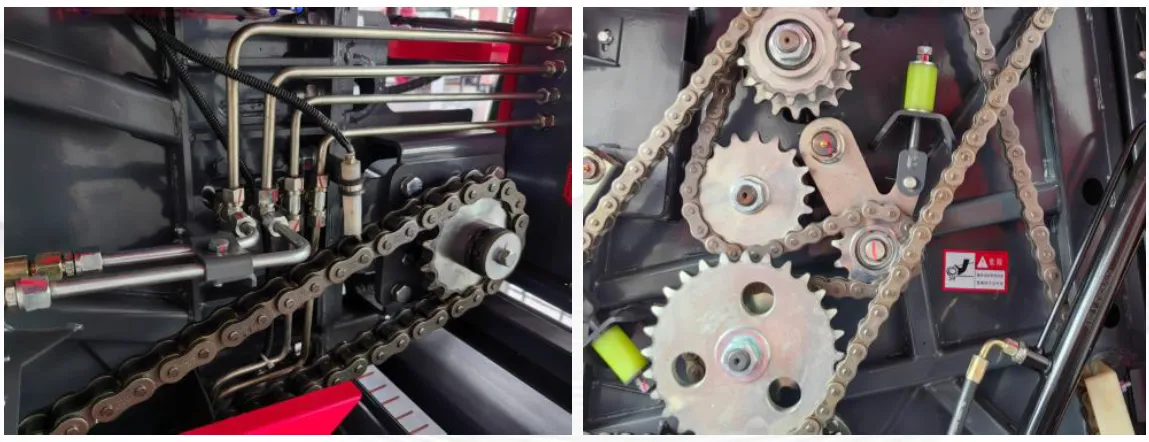
Five Reasons This Mini Round Baler Stands Out
The EP-Φ630×700 is rated for 25–50 HP at 540 rpm PTO — a power range that covers the compact and sub-compact tractors found on the majority of small farms across Korea, Southeast Asia, and Eastern Europe. Farmers running a 30–40 HP Korean-built utility tractor can operate this mini round baler at full capacity without any PTO gearbox modification or power upgrade, keeping the entry barrier low and the operating cost predictable.
The direct spring tooth feeding mechanism eliminates the separate pre-feeder stage found in larger round baler machine designs. Spring teeth at the pickup lift and transfer material directly into the compressing chamber in one continuous motion, reducing mechanical complexity and the number of moving components that require maintenance. This simplicity is a deliberate choice for an entry-level machine — fewer parts means fewer potential failure points during a short baling window.
At 440 kg, this small round baler moves between sites on a standard flatbed or farm trailer without requiring a heavy haulage setup. For contractors servicing multiple small farms in a day, this transport flexibility directly reduces operating costs. The compact overall footprint of 1300×1300×1350 mm also means the machine stores in a standard shed bay alongside other equipment without dedicated floor space.
Rather than net wrapping, this machine uses rope bundling — a lower-cost wrapping method well-suited to operations where bales are consumed quickly or stored under cover rather than left in the open field. Rope is less expensive per bale than round bale net wrap, and the wrapping mechanism is mechanically simpler to service. For hobby farms and small livestock operations where bale turnover is fast, rope wrapping keeps consumable costs proportionate to the operation's scale.
The 2–5 km/h working speed range suits the pace of small-plot operations where headland turns are frequent and windrow density varies significantly across a field. Slower working speeds also allow the operator to manage feeding quality more precisely, preventing overload of the 700 mm wide bale chamber in dense or tangled crop material. This operating envelope is markedly different from the high-speed throughput focus of large-scale agricultural round baler models — it's designed for precision over volume.
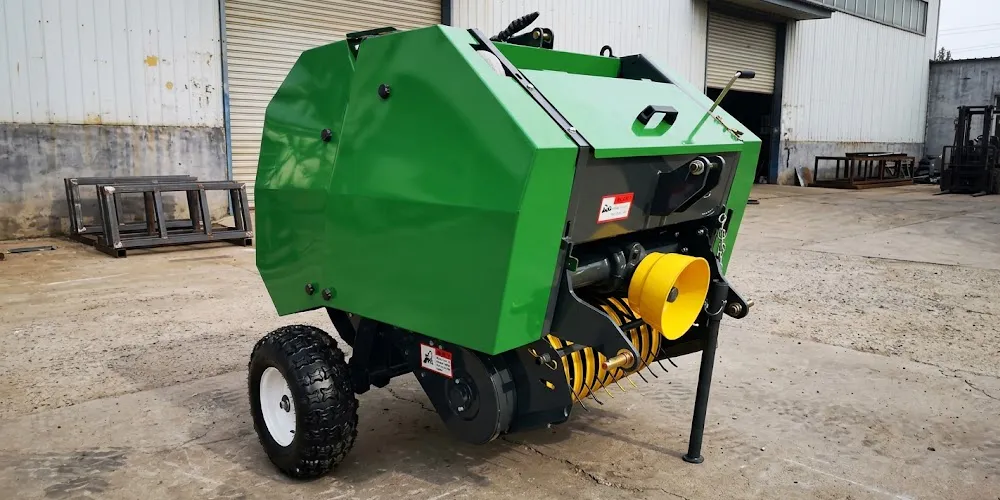
How This Mini Round Baler Works
The EP-Φ630×700 operates on a straightforward mechanical sequence that suits operators new to baling as much as experienced ones. The tractor PTO drives the machine at 540 rpm. The spring tooth pickup at 800 mm width sweeps windrowed material from the ground surface and channels it directly into the roll drum bale chamber — no separate pre-feeder is involved. As the crop enters the chamber, the roll drums begin rotating and accumulate material in a spiral pattern, building the bale from the inside outward. Operating speed is maintained at 2–5 km/h to keep material intake steady relative to drum rotation speed.
As the bale diameter reaches the target Φ630 mm, the operator initiates rope wrapping either manually or via the machine's automatic trigger. Rope is wound around the bale at preset intervals until the bale is secured. The rear gate opens, the finished bale drops to the field surface, and the gate closes to begin the next cycle. The entire process is mechanically driven from the PTO with minimal electronic complexity — a deliberate design choice that makes the machine easier to service in remote rural locations where electronic fault diagnosis equipment is not readily available. Understanding what is a baler used for at this scale becomes very practical: it is a residue and forage management tool that fits the resources of a small farming operation without creating new complexity.
Materials and Build Quality
Despite its compact size, the EP-Φ630×700 is built from the same class of structural steel used in heavier baling equipment. Frame members are fully welded at all load-bearing intersections to handle the repetitive compression forces that accumulate across a baling shift. The roll drum pressing surfaces are hardened to resist wear from abrasive crop material, and the overall machine geometry is designed to keep weight balanced when towed on uneven terrain.
The 18×6.50-8-4PR tires are rated for the combined weight of the machine and bale load on soft field surfaces without excessive compaction or sinking. PTO input components — shaft, coupling, and internal drive — are selected to handle the torque range of 25–50 HP tractors without over-engineering, which keeps the replacement cost of round baler parts reasonable throughout the machine's service life. External surfaces carry a protective paint finish suited to the outdoor storage conditions typical of small farm operations in Korea, Russia, and equivalent climates where inter-season weather exposure is significant. The rope wrapping mechanism uses a mechanically simple guide-and-spool arrangement that operators can re-thread and adjust without specialist tools in the field.
Where This Mini Round Baler Gets Used
دی round baler application scope for the EP-Φ630×700 is defined by its size class. This is not a high-throughput machine — it is a precision tool for environments where a larger round baler machine simply cannot operate, or where the economics of a full-size machine don't match the farm's output requirements.
At 800 mm picking width and 1300 mm overall body width, this machine moves through orchard rows that would be inaccessible to full-size balers. It clears mown grass cover crops from between tree or vine rows, producing compact bales that can be removed easily without disrupting root zones or soil structure around established plantings. This use case is common in Korean pear and apple orchards, as well as European vineyard operations.
After hand-cut or small-combine grain harvest, this mini round hay baler collects straw windrows from plots where full-size machinery cannot maneuver. Farms across rural Korea, Mongolia, and similar regions often manage fragmented land parcels of 1–5 hectares each, where a 440 kg compact machine towed by a small tractor is a practical fit for clearing residue before the next planting season.
Hobby farmers raising goats, sheep, or a small number of cattle need compact hay round bales they can move and place without mechanical bale handlers. The Φ630×700 mm bale produced by this machine weighs roughly 60–100 kg in dry grass — manageable for two people on the ground. This matches the feeding scale of a small ruminant herd without producing excess bale inventory that sits and degrades between feeding cycles.
Market gardeners dealing with end-of-season crop canopy or mown field margins can use this compact small round baler to consolidate organic material for composting or off-site disposal. The rope-wrapped bale format is easy to cut open and spread — practical for operations that return baled material to the soil rather than transporting it for commercial sale.
Matched System Accessories
A reliable baling system depends on more than the baler itself. The PTO shaft and gearbox connecting tractor to machine carry significant load during every baling cycle, and using correctly rated components prevents drivetrain failures that can strand a machine mid-field during a short seasonal window.
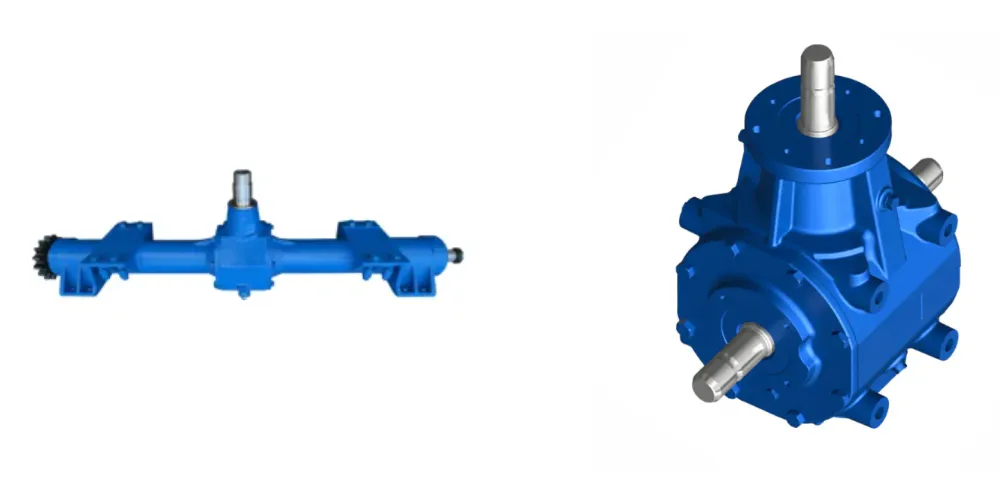
دی round baler gearbox on a compact machine like this handles the full torque load from a 25–50 HP PTO output across the complete baling cycle. We supply matched gearbox units rated for this power and RPM range — avoiding the premature wear that occurs when an undersized or generic gearbox is fitted to a purpose-built compact baler. A correctly matched Round Baler Gearbox ensures smooth, efficient power transfer from PTO input through to the drum and pickup drives.
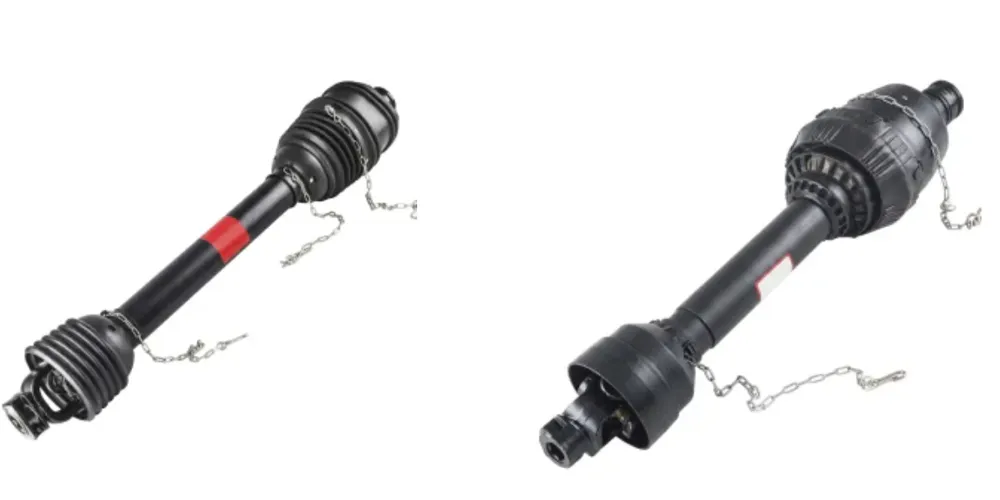
The PTO shaft is the first mechanical link in the drivetrain chain. On a trailed mini baler, shaft length and cross-joint angle must be correctly matched to the tractor's hitch geometry to avoid vibration and premature joint wear. We supply PTO shafts dimensioned for compact tractor applications in the 25–50 HP range, with appropriate overrun clutch protection rated for the baler's mass. Using a shaft that matches the machine's rated PTO speed of 540 rpm eliminates the torque shock that causes early failure in generic universal-joint shafts.
Who Built This Machine
Our product development team draws on more than a decade of hands-on mechanical engineering experience in agricultural equipment. The people making decisions about how this baler is designed and built include engineers who have spent time in the field alongside the farmers and contractors using the machines — not just reviewing data from the factory floor.
We saw a real problem in the small farm segment: too many operations were either overspending on machines designed for a much larger scale, or buying underbuilt equipment that failed within the first season under sustained field use. The compact baler range was developed to close that gap — machines that are genuinely right-sized for their intended workload, built to a consistent quality standard, and supported with available spare parts. What started as a 2,000 m² production facility in 2021 has expanded to a 32,000 m² intelligent production campus, with annual output growing from 100 to 2,000 units per year. Our distribution network now reaches Mongolia, Russia, and Belarus in addition to a growing dealer base across Korea and Southeast Asia.
Every mini round baler that ships from our facility undergoes a structured pre-delivery check covering the PTO drive, pickup mechanism, drum rotation, and rope wrapping sequence. We stand behind each machine we ship with technical support accessible in the buyer's time zone, and a parts supply chain designed for the realities of remote agricultural operations.
Frequently Asked Questions
What is the smallest compact round baler that works reliably with a 30 HP Korean utility tractor for orchard hay baling?
The EP-Φ630×700 is rated for 25–50 HP at 540 rpm PTO, which covers a 30 HP Korean utility tractor comfortably across the full baling cycle. For orchard use specifically, the 800 mm pickup width and 1300 mm overall body width allow the machine to operate in tree row spacings of 3.5 m or wider without risk of frame contact with tree trunks. Operating at the lower end of the 2–5 km/h speed range works best when windrows are dense or unevenly distributed, as found in orchard grass cover crops after mowing between tree rows.
How much does a round bale of hay weigh when produced by a mini round baler with a Φ630 mm bale diameter?
A Φ630×700 mm round bale of dry grass hay typically weighs between 60 and 100 kg depending on crop density and moisture level at time of baling. Wetter material, or denser crops like alfalfa, will produce heavier bales at the upper end of that range. This weight class is specifically practical for hobby farms and small livestock operations — two people can move a bale by hand, and a standard front-loader on a 30 HP compact tractor handles it without difficulty. This is substantially lighter than the 400–600 kg bales produced by full-size round balers, which reflects the intended use case of small-scale fodder management rather than high-volume commercial bale production.
Which round baler parts on a compact rope-wrapping baler wear out fastest during regular rice straw baling operations in rural Korea?
On a compact spring tooth baler used in rice straw baling, the spring teeth on the pickup are typically the first components to show wear — rice straw contains silica particles that accelerate abrasive wear on metal tooth profiles. The rope guide components and knotter mechanism also require periodic inspection, as rope tension variations in field humidity conditions can cause uneven wear in the feed path. The drum pressing rollers and the PTO input bearing are secondary wear items that should be checked at the start of each new season. Keeping a small stock of spring teeth and rope guide parts at the farm level reduces downtime during the concentrated post-harvest straw baling period in late autumn in Korean grain-growing regions.
How many square bales are in a round bale produced by a mini round hay baler at the Φ630 mm diameter size?
At Φ630×700 mm in dry grass hay, a round bale from this machine weighs roughly 70–90 kg. A standard small square bale weighs approximately 20–25 kg, so the equivalent is around three to four small square bales per round bale from this machine. This is a much lower conversion ratio than full-size round balers, which reflects the deliberately compact bale format. For small livestock operations, this means each round bale lasts approximately three to five days for a small group of sheep or goats — practical for daily feeding management without the wastage that can occur when a large-format round bale is opened for a small herd.
Where can smallholder farms in Mongolia find compatible spare parts for a compact mini hay baler during the summer baling season?
For operators in Mongolia and similar remote markets, the most practical approach is to source a seasonal spare parts kit before the summer baling window opens — typically covering spring teeth, rope guide components, and a PTO input shaft seal set. Our export parts channel can supply matched components directly to dealers and end users in Mongolia, with lead times that need to be factored into pre-season planning. Operators who rely on in-season parts sourcing in remote locations risk significant downtime. Contacting the export sales team with the machine model reference at least six to eight weeks before the baling season begins is the most reliable way to ensure parts availability without logistics delays impacting the harvest window.
ایڈیٹر: PXY