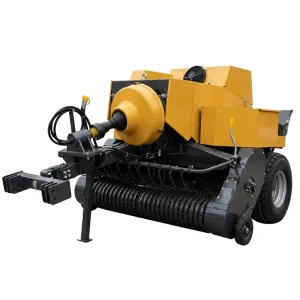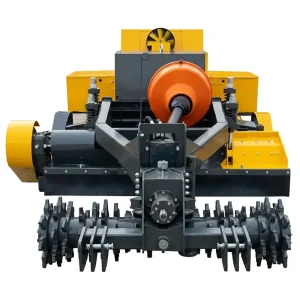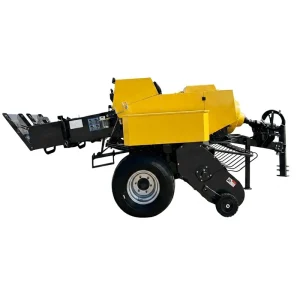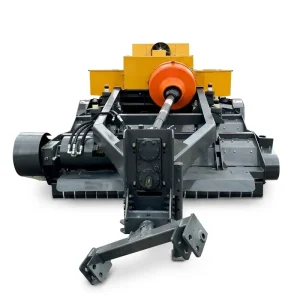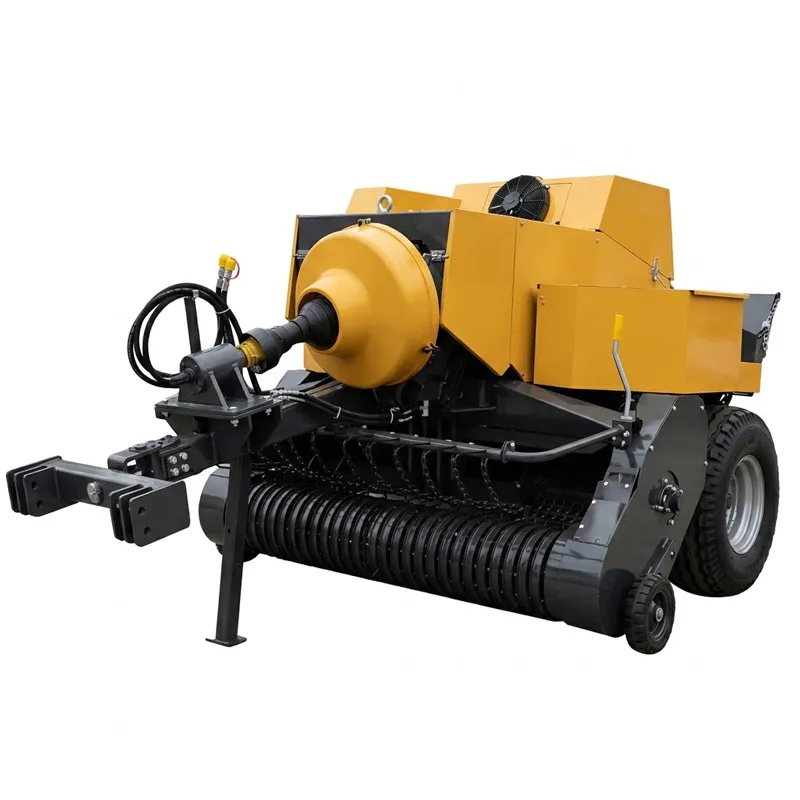
EP-5700×2800×1780mm LWH Spring Tooth Square Baler
这 EP-9YF-2200 Spring Tooth Square Baler is a mid-mounted trailed machine engineered for efficient harvesting of wheat, rice, cotton, and corn straw. Featuring a wide 2200mm spring tooth pickup and a fork feeding mechanism, it ensures smooth crop intake. The unit utilizes two D-type knotters for reliable automatic rope baling, producing dense bales with a 460×360mm compression chamber. Designed for both paddy and dry fields, it requires a matching power of ≥36.8 kW. With overall dimensions of 5700×2800×1780mm and a weight of 1950kg, this baler significantly improves harvesting speed and reduces labor intensity during peak farming seasons.
Spring Tooth Type · 2200mm Picking Width · Towed Square Baler
EP-5700×2800×1780mm LWH
Spring Tooth Square Baler
A high-capacity, mid-mounted trailed square baler built for wheat straw, rice straw, cotton stalk, corn stover, and a wide variety of forage grasses. Engineered for flat, stone-free paddy fields and dry farmland alike.
Technical Specifications
Full parameter sheet for the EP-5700×2800×1780mm Spring Tooth Square Baler. All data verified against factory build standards.
| # | 物品 | 单元 | 规格 |
|---|---|---|---|
| 1 | 型号名称 | — | EP-5700×2800×1780 Square Baler |
| 2 | Hitching Method | — | Towed-type (3-point or drawbar) |
| 3 | Picking Width | 毫米 | 2200 |
| 4 | Feeding Inlet Width | 毫米 | — |
| 5 | Picker Structure | — | Spring Tooth Type |
| 6 | Feeder Structure | — | Fork Feeding Mechanism |
| 7 | Knotter Type | — | D-type |
| 8 | Number of Knotters | pc | 2 |
| 9 | Compression Chamber Section (W×H) | 毫米 | 460×360 |
| 10 | 打包方法 | — | Automatic Rope Baling |
| 11 | Matching Power Range | 千瓦 | ≥36.8 |
| 12 | Overall Dimension (L×W×H) | 毫米 | 5700×2800×1780 |
| 13 | 机器重量 | 公斤 | 1950 |
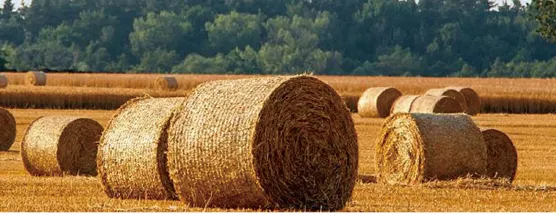
What Makes This Square Baler Different
The EP spring tooth square baler is a towed-type, mid-mounted machine designed for commercial and large-scale post-harvest residue collection. With a 2200mm picking width and a D-type knotter system equipped with 2 knotters, it processes material efficiently across wide swaths in a single pass — reducing labor hours and fuel expenditure significantly compared to older-generation small square balers.
The spring tooth pickup mechanism is the core differentiator. Unlike rigid finger-type pickers, the spring tooth design flexes to follow ground contours, reducing crop loss on uneven terrain and ensuring a clean, complete pickup of lodged or windrow-spread material. Whether you are baling rice straw in Korea's lowland paddies, wheat stubble in Russia's broad plains, or forage grass in the grasslands of Inner Mongolia, this machine handles varying crop conditions with consistent performance.
The fork feeding mechanism pushes material into the compression chamber evenly, minimizing blockages that can stall operations during high-throughput harvest windows. The automatic rope baling system further reduces manual intervention, letting operators focus on driving lines rather than monitoring knotter action.
How This Square Baler Works
Understanding the operating cycle helps you match this large square baler to your farm's workflow and tractor capacity.
① Pickup
The spring tooth pickup reel rotates forward, lifting cut crop material from the ground surface or windrow into the machine's feed channel. The spring tooth fingers flex over irregularities in the soil surface, ensuring minimal crop is left behind even on settled or compacted ground.
② Fork Feeding
Gathered material passes through the fork feeding mechanism, which packs the crop evenly into the compression inlet. This stage prevents bridging and uneven packing — a common cause of bale density inconsistency in older-generation hay baler machines.
③ Compression
The plunger drives material into the 460×360mm compression chamber. Each stroke compresses successive flakes of crop into a growing bale. The chamber geometry produces dense, stable bales suitable for long-haul transport — making them significantly more cost-efficient to move than loosely formed material.
④ Knotting & Ejection
When the bale reaches target length, the dual D-type knotters tie twine automatically around the bale. The finished square hay bale is then ejected rearward onto the field. An operator can collect, stack, or load bales without stopping the machine for tying — maximizing throughput during compressed harvest windows.
Five Core Advantages
Why farms across Korea, Russia, Mongolia, and Belarus specify this square baler year after year.
Wide-Swath Efficiency
At 2200mm picking width, this large square baler clears more ground per tractor pass than many small square baler alternatives. For large-scale operations baling hundreds of acres in a single harvest window, fewer passes translates directly into lower diesel consumption and reduced field compaction from repeated tractor traffic.
Spring Tooth Pickup Reliability
The spring tooth pickup design outperforms rigid-tine systems in wet or irregular field conditions — a critical advantage in paddy regions across East and Southeast Asia where field surfaces are rarely perfectly level after harvest. Fewer missed stems means higher bale yield per hectare.
High-Density Square Bales
The 460×360mm compression chamber produces rectangular square hay bales with high volumetric density. Unlike round bales, square bales stack flat, allowing more material per truck or rail car — a meaningful logistics advantage for straw recycling businesses and biomass fuel operations.
Automatic Rope Baling
Manual twine tying is eliminated. The automatic rope baling system fires the dual D-type knotters without operator input, removing a major source of stoppages and inconsistent bale quality. This is especially valuable when running the machine with a single operator over long shifts.
Broad Tractor Compatibility
Requiring ≥36.8kW (approximately 50hp), this square baler for compact tractor and mid-size utility tractor pairing gives farms flexibility. It does not require large row-crop tractors, making it accessible to operations running 50–80hp machines — a common configuration among Korean and Eastern European grain farms.
Materials & Build Quality
The durability of a square baler machine is determined first by its structural materials. This machine is designed for 1,000+ operating hours per season in demanding harvest environments.
Main Frame
Heavy-section welded steel box beam construction. The chassis resists torsional loads from high-output compression strokes without flexing or cracking at weld joints — a common failure mode in underbuilt competing models.
拾音器
High-carbon spring steel tines, heat-treated for fatigue resistance. Spring tooth geometry provides consistent ground clearance across uneven paddy field surfaces while maintaining pickup efficiency through an entire working season.
Compression Chamber
Hardened wear-plate lining on compression surfaces. The 460×360mm chamber section is dimensionally matched to standard bale-handling equipment globally, ensuring bales produced here integrate directly into existing storage and transport infrastructure.
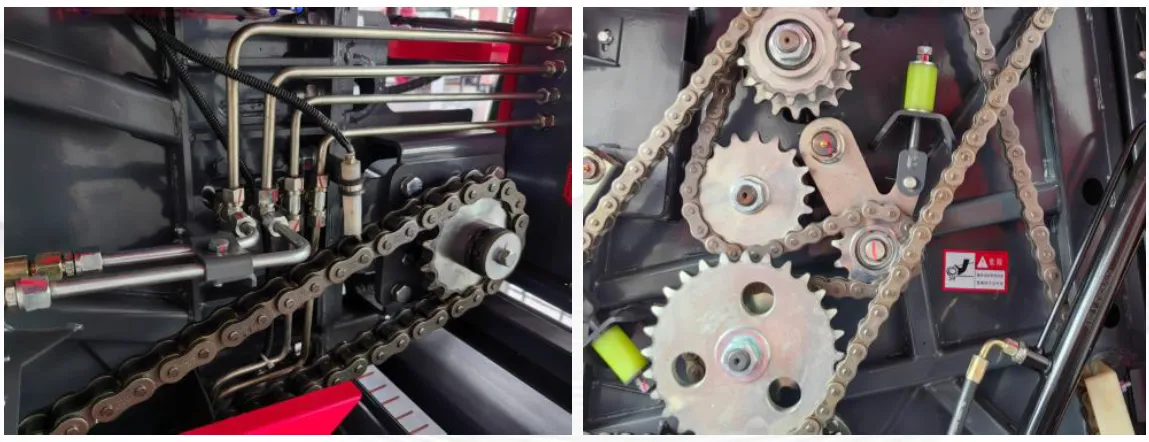
Drivetrain Components
PTO-driven gear train with forged and heat-treated gears throughout. Sealed bearing units on all rotating assemblies reduce lubrication intervals and extend component life in dusty or high-humidity harvest environments.
Application Scenarios
This square baler handles a wide range of post-harvest and forage crop situations. Below are the primary use environments.
🌾 Wheat & Rice Straw Recovery
After grain combine harvest, residual straw is the most common baling application globally. This machine handles both the dense, short-stemmed straw typical of Asian paddy varieties and the longer, coarser straw from temperate wheat varieties in Eastern Europe and Central Asia.
🌽 Corn Stover Baling
Corn stover presents a challenge for many small square hay balers due to its volume and stem thickness. The spring tooth pickup and fork feeding mechanism on this machine handle bulkier stover material without the jamming events that plague lower-capacity baler designs.
🌿 Cotton Stalk Collection
Cotton stalks, often left standing or knocked over after mechanical defoliation, require a robust pickup mechanism. The spring tooth system's flexible ground-following action lifts cotton material reliably across the variable surface conditions common in drip-irrigated cotton fields.
🐄 Livestock Feed Preparation
Operations producing square hay bales for dairy or beef cattle benefit from the dense, uniformly shaped bales this machine produces. Square bales stack efficiently in feed storage buildings and are easier to portion than large round bales — a practical advantage for smaller livestock operations managing daily feed allocation.
♻️ Biomass & Straw Recycling
Biomass energy companies and mushroom substrate producers require large volumes of uniformly sized bales for logistics and processing line compatibility. The consistent 460×360mm bale cross-section from this machine integrates directly into automated biomass handling systems, reducing pre-processing costs.
Regulatory & Safety Compliance
Agricultural machinery operating across international markets must meet differing safety and mechanical standards. Below is a summary of key frameworks relevant to this square baler and its drivetrain components.
South Korea (KS B ISO Standards)
Korean agricultural machinery must comply with KS B ISO 11684 for safety signs and KS B ISO 4254 for agricultural machinery general safety. PTO-driven implements are additionally governed by KS B 6024 guarding requirements. Operators in Korea are advised to verify PTO shaft guard compliance before field deployment.
European Union (CE / Machinery Directive 2006/42/EC)
For distribution within EU member states including the Netherlands and Germany, towed agricultural machinery falls under the Machinery Directive 2006/42/EC. CE marking requires documented risk assessment, conformity of PTO shielding to EN 1152, and maintenance of a technical file. Buyers in EU markets should request CE declaration of conformity documentation prior to import.
Russia & Belarus (EAEU TR)
Within the Eurasian Economic Union, agricultural machinery must comply with TR EAEU 010/2011 on machine safety and TR EAEU 018/2011 on wheeled vehicle safety where applicable. GOST R certification may also be required in Russia for commercial sales. Buyers in these markets should work with their local customs agent to confirm current documentation requirements.
General PTO Safety (ISO 500)
Regardless of destination market, ISO 500 specifies PTO shaft dimensions and rotational speed standards (540 rpm / 1000 rpm) for compatibility between tractors and implements. This square baler is designed for standard 540rpm PTO operation, consistent with the ≥36.8kW tractor power requirement. Always ensure PTO shaft guards are intact before engagement.
Compatible Components & One-Stop Supply
We supply a complete ecosystem of drivetrain and transmission parts designed to work seamlessly with this square baler — reducing your sourcing complexity and ensuring system-level compatibility.
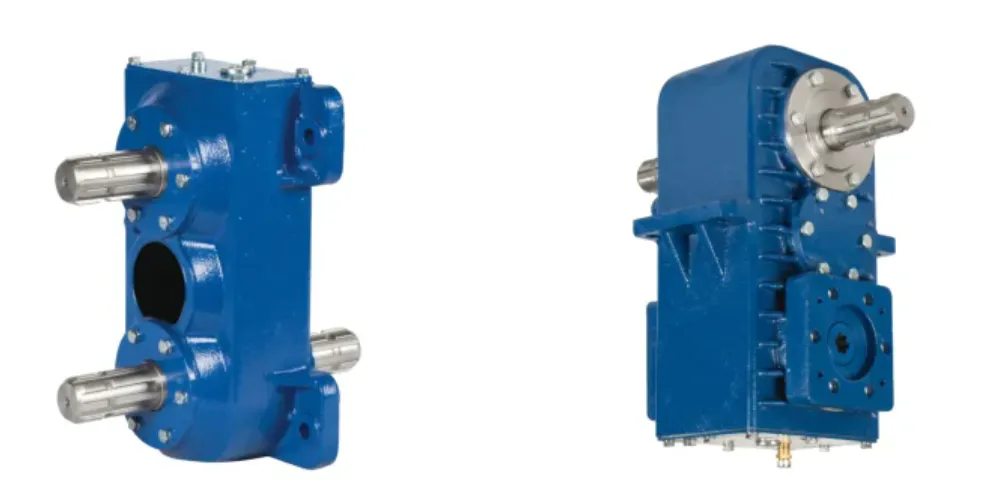
Square Baler Gearbox
The gearbox is the mechanical heart of any square baler. Worn or incompatible gearboxes are one of the leading causes of mid-season breakdowns. Our matched square baler gearbox units are manufactured to the same dimensional specifications as the drivetrain in this machine — ensuring direct-fit replacement without shimming or adaptation work. Stocking a spare gearbox eliminates the multi-day lead time that can cost you an entire harvest window.
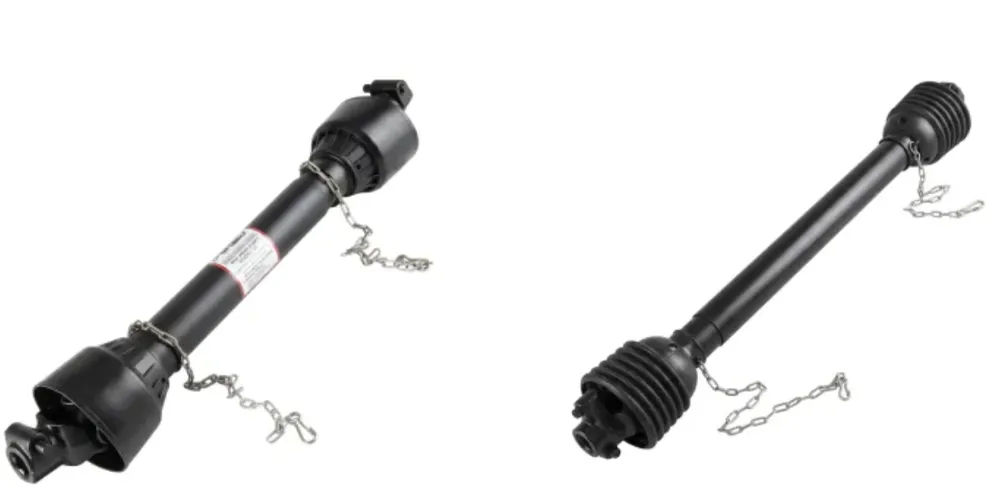
PTO Drive Shaft
A correctly rated PTO shaft is not optional equipment — it is a safety-critical component. Mismatched or worn PTO shafts can fail under the high torque loads generated during peak compression cycles, creating hazardous conditions for the operator and bystanders. Our EP PTO Shaft for square balers is rated for the torque output of tractors in the 37–75kW range, with overload slip clutch protection as standard. Available in custom lengths to suit your tractor-baler hitch distance.
About Us — A Decade of Baler Experience
Our team is made up of engineers, working farmers, and field service technicians — people who understand post-harvest residue management from direct experience, not from product literature. When a knotter jams at 7pm in the middle of harvest, they know what that costs.
Founded in 2021, we started in a 2,000-square-meter workshop producing a modest volume of baling machines each year. Honest machines at fair value, backed by people who could actually diagnose problems in the field. Word spread — particularly in Mongolia, Russia, and Belarus, where durable, serviceable equipment that can be repaired with standard tools is not a preference but a requirement.
Today we operate from a 32,000-square-meter modern production facility, with annual output approaching 2,000 units. The core commitment has not changed: every square baler that leaves this facility is checked by people who have spent time baling in real field conditions — not just running factory acceptance tests.
Frequently Asked Questions
Q1. How many horsepower does a tractor need to run this square baler efficiently in paddy field conditions?
This machine requires a minimum of 36.8kW — roughly 50 horsepower at the PTO. For paddy field operation with wet or heavy straw, tractors in the 60–75hp range give you comfortable headroom and reduce clutch slip during high-load compression strokes. Oversizing your tractor slightly is always preferable to running at the limit, particularly during long baling shifts where sustained load matters more than peak capacity.
Q2. What is the difference between a spring tooth pickup and a rigid tine pickup on a square baler machine?
Spring tooth tines flex when they encounter a hard object — a clod, stone, or uneven soil ridge — and return to their working position without breaking. Rigid tines cannot flex, so they either miss material lying in low spots or break when they hit an obstruction. For Korean paddy fields and similar environments where surface uniformity after combine harvest is variable, the spring tooth design provides more consistent pickup performance and lower maintenance cost over a full season.
Q3. How much does a finished square bale of hay or straw typically weigh with this baler?
Bale weight varies significantly depending on crop moisture content, crop type, and compression pressure settings. Rice straw bales at 14–16% moisture typically weigh between 18–28kg per bale for the 460×360mm cross-section. Wheat straw runs slightly heavier due to density differences. Forage grass baled at higher moisture can approach 35–40kg. Always check target bale weight against your stacking and transport equipment's rated capacity.
Q4. Do they still manufacture traditional small square balers, or has the industry shifted entirely to large square and round formats?
Both formats remain actively manufactured and in high demand. Small square balers serve livestock operations where hand-stackable bales are a practical necessity — particularly for smaller dairy farms, horse operations, and smallholder farms that do not have bale-handling loaders. Large square balers dominate commercial straw recycling and biomass operations. The choice between square hay baler vs round baler comes down to intended end use, storage infrastructure, and whether the operation needs a bale format that integrates into automated handling lines.
Q5. What are small square hay bales typically used for in commercial livestock feeding operations?
Small square bales of hay are widely used in horse stables, small dairy barns, and smallholder sheep operations because individual bales can be carried, positioned, and fed out by one person without mechanical handling equipment. They also fit standard pallet sizes, making them practical for hay dealers who sell retail volumes through feed stores. In markets like South Korea and Japan, where many farm units are small and indoor stabling is common, the small square bale format retains significant market share despite the efficiency advantages of larger formats.
Q6. Which baler type is better for straw recycling businesses — a square baler or a round baler?
Square balers produce uniform, stackable bales that fit flat on truck beds and in shipping containers — a meaningful logistics advantage when transporting large volumes of straw to processing facilities. Round bales have more dead airspace in transport due to their curved profile. For biomass energy companies, mushroom substrate producers, and paper pulp operations where transport cost per tonne is a key variable, the difference between round and square hay bales in terms of vehicle utilization is often decisive. Square format wins on logistics; round format may win on baling speed per hour in some crops.
Q7. How many square bales of hay can I expect to produce per acre with a machine like this?
The number of square bales per acre depends heavily on standing crop yield, moisture at baling, and target bale density. For wheat straw at typical temperate yields, a common range is 15–30 bales per acre at the 460×360mm cross-section this machine produces. Rice straw yields more material per hectare in high-productivity paddy regions, so bale counts per acre will be higher. Your local agronomist can give crop-specific estimates based on actual yield data from your fields.
Q8. What kind of maintenance schedule should I follow to keep this square baler running through the full harvest season?
At minimum, grease all lubrication points daily during active baling. Check knotter timing and twine tension every 500 bales. Inspect spring tooth tines weekly for bent or broken units and replace individually as needed — operating with missing tines creates uneven pickup and accelerates wear on adjacent components. The gearbox oil level should be checked every 50 operating hours and changed at the manufacturer's recommended interval. Keeping a basic spare parts kit — knotters, tines, drive belts, and shear bolts — on the field eliminates most downtime events.
编辑:PXY